Aug 14, 2023
Mechanical timers and digital timers differ primarily in their drive mechanism, timing accuracy, and integration complexity. Mechanical timers use a spring-wound or synchronous motor-driven mechanism with physical contacts, typically offering timing accuracy of ±5% to ±10% and a lifespan of 5,000 to 10,000 cycles. Digital timers use microcontrollers and quartz oscillators, offering accuracy of ±0.01% to ±0.1% and a lifespan exceeding 50,000 cycles, but require a continuous low-voltage DC power supply. For oven OEMs, the selection boundary depends on required timing precision, the need for complex cooking profiles, and the available control board architecture.

Mechanical Timers: Characterized by spring-wound or motor-driven mechanisms, typically rated for 10A/16A at 250VAC, timing ranges from 0–60 minutes, and no standby power consumption.
Digital Timers: Characterized by MCU control and relay/SSR outputs, offering 1-second to 99-hour ranges, multi-stage programming, and accuracy within ±1 second per day.
Environmental Tolerance: Mechanical timers are suitable for high-temperature, high-humidity environments near the cavity; digital timers require thermal isolation (ambient <60°C) due to sensitive PCBA components.
Cost Structure: Mechanical timers offer a lower BOM cost (typically $1–$3); digital timers carry a higher BOM cost (typically $5–$15) but enable smart features.
In commercial and residential ovens, the timer is not just a clock-it is the primary safety and process control device that manages the heating elements. The technical pain point is that oven chambers operate at high temperatures (up to 250°C–500°C), and the timer must reliably switch the high current drawn by heating tubes (often 10A–16A). If the timer contacts arc or weld together due to frequent switching, the heating element will continue to run, leading to overheating, burnt food, or fire hazards. This scenario requires a timer system that matches the heating element's inrush current, maintains accurate cut-off times to prevent energy waste, and physically isolates the user interface from the high-temperature cavity.
Timing Accuracy & Profile Complexity: Requires evaluating if the recipe demands multi-stage baking (e.g., 10 mins at 180°C, then 20 mins at 200°C). Engineering significance: Mechanical timers can only handle a single countdown; digital timers are required for multi-stage profiles.
Contact Rating & Load Type: Requires matching the timer's relay rating to the heating element's wattage (e.g., 16A resistive load). Engineering significance: Heating elements have a cold resistance lower than their hot resistance, causing an inrush current. Timers must be rated for this surge (e.g., 1/2 HP or 16A pilot duty) to prevent contact welding.
Thermal Isolation: Requires placing the timer's control board away from the oven cavity. Engineering significance: Digital timers use electrolytic capacitors and MCUs that derate or fail above 60°C. Mechanical timers, often made of metal and high-temp plastics (like PPS), can be mounted closer to the heat source.
| Technical Dimension | Mechanical Oven Timer | Digital Oven Timer |
|---|---|---|
| Drive Mechanism | Spring-wound (wind-up) or synchronous motor | Quartz crystal oscillator + Microcontroller (MCU) |
| Timing Accuracy | ±5% to ±10% (varies with spring tension or motor frequency) | ±0.01% to ±0.1% (±1 second per day) |
| Max Setting Range | Typically 0–60 or 0–120 minutes | Up to 99 hours, programmable |
| Lifespan (Cycles) | 5,000 – 10,000 cycles (limited by mechanical gear wear) | 50,000 – 100,000+ cycles (relay limited) |
| Load Switching Capacity | Up to 16A / 250VAC direct switching | Usually requires a separate power relay or SSR |
| Standby Power | 0W (purely mechanical) | 0.5W – 2W (MCU and display consumption) |
| Display Type | Analog dial with physical markings | LED / LCD digital display |
| Integration Boundary | Suitable for basic analog ovens; cost-sensitive BOMs | Suitable for smart ovens, multi-stage baking, precise control |
Application Boundary: Mechanical timers are positioned for entry-level ovens where cost is the primary driver and a simple countdown is sufficient. Digital timers are positioned for commercial ovens, smart appliances, and systems requiring repeatable, high-precision cooking profiles and integration with other electronic controls.
Pizza Deck Ovens: Matching the requirement for high-temperature endurance and simple operation; mechanical timers are often preferred for their ability to withstand ambient heat near the deck and their simple, fail-safe operation.
Convection Steam Ovens: Matching the requirement for multi-stage cooking; digital timers integrate with the PID controllers and steam valves to manage complex recipes.
Batch Baking Equipment: Matching the requirement for strict energy management; digital timers with auto-shutoff ensure the heating tubes (e.g., finned tubular heaters) do not run unattended, reducing fire risks.

Can a mechanical timer be replaced with a digital timer in an existing oven design?
It requires a redesign of the control panel. A digital timer requires a low-voltage DC power supply (typically 5V or 12V) and a separate relay to handle the 16A heating load, whereas a mechanical timer switches the load directly. The wiring harness and mounting points must also be adapted.
What is the typical failure mode of an oven mechanical timer?
The most common failure is the degradation of the spring mechanism or the wearing of the internal gears, leading to inaccurate timing. The second is contact welding due to the high inrush current of the heating element.
How does timer accuracy affect heating element lifespan?
If the timer fails to cut off power accurately, the heating element will remain energized beyond the intended cooking cycle, leading to higher sheath temperatures, accelerated oxidation, and potential failure.
Do digital timers require special thermal management in ovens?
Yes. The electronic components (MCU, capacitors) are generally rated for ambient temperatures up to 60°C–70°C. In built-in ovens, the control board must be thermally isolated from the cavity using air gaps or insulation.
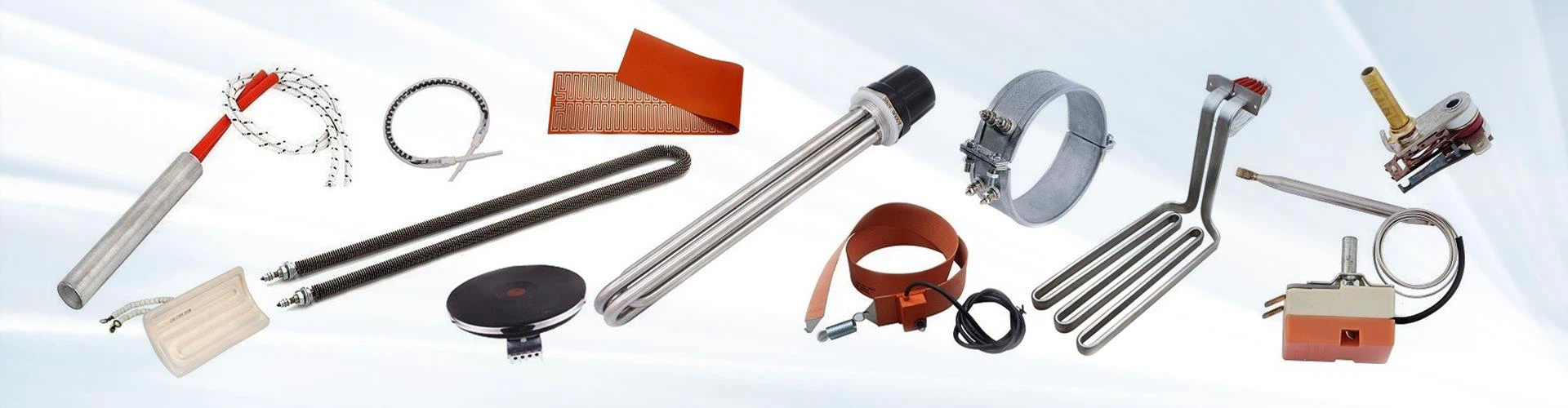
For precise temperature regulation that pairs with your oven timers, explore our capillary thermostats or KST thermostats. For the heating elements themselves, refer to our finned tubular heaters for commercial baking ovens and flat tubular heaters.
How to Get a Custom Heating Solution Quote:
To ensure your oven timer and heating system are perfectly matched, our engineering team can evaluate your thermal load, required safety certifications, and control architecture. Send your heating specifications, target oven temperature, and timer interface requirements to our engineering team for a professional review and custom manufacturing quotation.
Liu, Y., et al. (2019). Design and Reliability Analysis of Mechanical Timers in Household Appliances. Journal of Mechanical Engineering.
IEC 60730-2-7: Automatic electrical controls for household and similar use - Part 2-7: Particular requirements for timers and time switches.
UL 858: Standard for Household Electric Ranges (Requirements for timer circuits and thermal cut-offs).
Jaye Heater Technology. Heating Element Selection Guide for Commercial Ovens. Jaye Heater Knowledge Center.