Apr 17, 2026
Silicone rubber drum heaters are flexible electric heating devices designed for heating and maintaining the temperature of liquid or semi-solid materials stored in drums, typically 20L, 50L, or 200L standard barrels. They are widely used across chemical processing, food production, pharmaceuticals, and petroleum industries where viscosity control or temperature stability is required.
Unlike rigid heating systems, silicone drum heaters offer direct-contact heating with high conformity to cylindrical surfaces, enabling efficient heat transfer and reduced thermal loss.
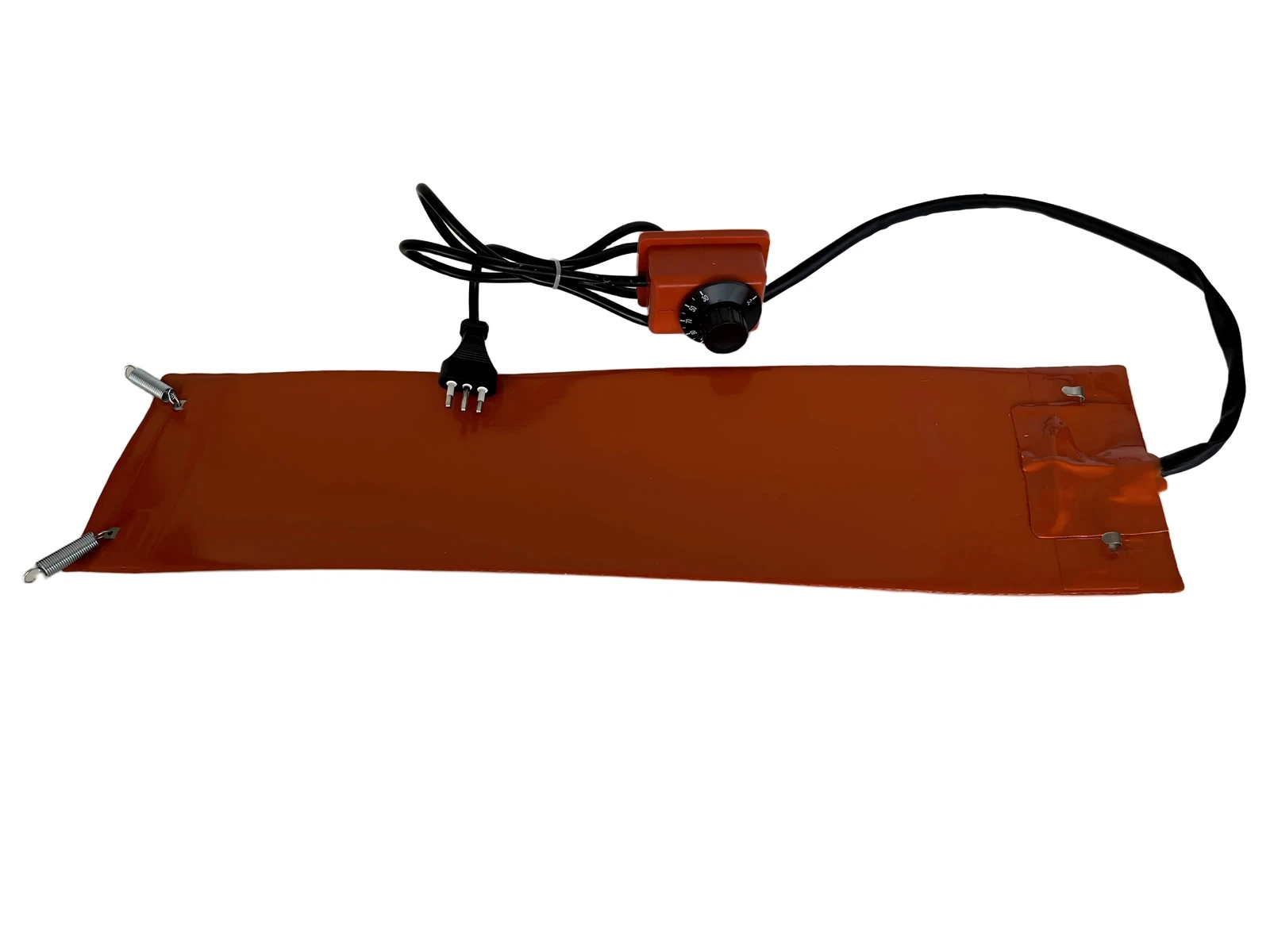
A silicone drum heater typically consists of a resistance heating element embedded within silicone rubber insulation layers. The heating core is usually made of nickel-chromium (NiCr) alloy, selected for its stable resistivity and long service life under continuous thermal cycling.
The silicone outer layer serves multiple purposes: electrical insulation, thermal stability, and mechanical flexibility. Most industrial-grade heaters operate within a temperature range of -60°C to 200°C, with short-term exposure tolerance up to 250°C depending on design.
Heat is generated through Joule heating and transferred via direct surface contact. Because silicone rubber has relatively low thermal conductivity, the design often incorporates uniform spacing of heating wires to avoid localized overheating.
Key performance parameters include power density, heat distribution uniformity, and thermal response time.
Typical power density ranges between 0.3 to 1.5 W/cm², depending on application requirements and drum material. Higher power densities are used for viscous substances such as waxes or resins, while lower settings are sufficient for water-based or low-viscosity liquids.
Thermal response is relatively fast, with most systems reaching operational temperature within 30–90 minutes depending on ambient conditions and insulation quality. Silicone drum heaters also provide stable temperature maintenance due to integrated thermostat compatibility, often using adjustable capillary thermostats or digital controllers.
Durability is another key advantage. Under standard industrial operation, service life commonly exceeds 3,000–5,000 heating hours.
Silicone drum heaters are widely used in industries requiring controlled heating of stored materials:
Chemical Industry: Heating adhesives, resins, and solvents to maintain flowability.
Food Processing: Melting chocolate, honey, and syrups without direct flame contact.
Petrochemical Sector: Reducing viscosity of lubricants, oils, and bitumen-based products.
Pharmaceutical Manufacturing: Maintaining stability of temperature-sensitive liquids.
In these environments, temperature consistency is critical. For example, certain epoxy resins require a stable range of 40–60°C to maintain viscosity suitable for pumping and mixing. Silicone drum heaters provide a stable and uniform heating environment, minimizing material degradation.
Compared with traditional heating methods such as oil baths, steam jackets, or heating chambers, silicone drum heaters offer several distinct advantages:
Energy Efficiency: Direct contact heating reduces heat loss to the environment, improving energy utilization by approximately 20–40% compared to indirect heating systems.
Installation Flexibility: No fixed infrastructure is required; heaters can be easily wrapped and removed from drums.
Operational Safety: Low surface leakage risk and reduced open-flame hazards make them suitable for controlled environments.
Temperature Precision: Localized heating allows better control over specific drum contents.
However, they also have limitations. Heat penetration is slower for highly viscous or solidified materials compared to immersion systems. In such cases, insulation jackets or drum base heaters are often used in combination.
Case 1: Adhesive Manufacturing Plant (Germany)
A manufacturer of industrial adhesives implemented silicone drum heaters to maintain epoxy resin at 50°C. Previously, the plant used hot water jackets, which resulted in inconsistent temperature distribution and high energy consumption. After switching, heating time was reduced by 35%, and energy usage decreased by approximately 28%. Product viscosity consistency also improved, reducing batch rejection rates.
Case 2: Food Processing Facility (Singapore)
A syrup production facility required controlled heating of honey drums to prevent crystallization. Silicone drum heaters were used at 45°C with integrated thermostatic control. Compared to steam heating, the system eliminated moisture contamination risks and reduced maintenance downtime by 40%.
Silicone rubber drum heaters represent a practical and efficient solution for controlled heating in industrial drum-based storage systems. Their combination of flexibility, safety, and energy efficiency makes them suitable for a wide range of applications where temperature stability directly impacts product quality.
While not a universal replacement for all heating systems, their performance advantages in moderate-temperature applications make them an increasingly preferred solution in modern industrial process heating.

If you require heating elements, Jaye Heater-as a long-standing manufacturer of heating elements-will assist you with our team of professional technicians and sales personnel.