Jun 18, 2025
The flexible nature and chemical resistance of PTFE heating coils make their installation method completely different from that of traditional metal heaters. Three major principles must be followed:
1.Close fit – Ensure that the gap between the heating surface and the heated body is ≤0.5mm to avoid local overheating caused by air insulation (PTFE thermal conductivity is only 0.25W/m·K).
2.Mechanical zero damage – Do not use metal clamps to directly press to prevent the PTFE layer from breaking.
3.Electrical safety isolation – A ground shielding layer must be installed in high humidity/corrosive environments.

The correct installation of the PTFE heating coil directly affects its service life and heating efficiency. Before installation, the following points must be ensured:
Surface cleaning: The surface of the heated equipment must be thoroughly cleaned to remove oil, dust or residual chemicals. It is recommended to wipe with a lint-free cloth and isopropyl alcohol (IPA) and avoid using corrosive solvents.
Check the integrity of the heating coil: Confirm that the PTFE heating coil is not damaged, cracked or deformed, especially whether the lead-out end of the resistance wire is firm.
Choose a suitable fixing method: Choose high-temperature resistant tape, fiberglass strapping or corrosion-resistant metal clamps (such as 304 stainless steel) according to the application scenario.

1. Fitting installation
The PTFE heating ring must fit tightly to the surface of the heated object, and the gap must not exceed 0.5mm, otherwise it will cause uneven heat transfer, affect heating efficiency and may cause local overheating.
For irregular-shaped equipment (such as reactors and pipelines), flexible PTFE heating sheets can be used, and thermal conductive silicone grease can be used to fill the tiny gaps.
2. Fixing method
High-temperature resistant tape fixation: suitable for static, low-vibration environments, such as laboratory equipment. 3M™ PTFE tape is recommended, with a temperature resistance of up to 260°C.
Fiberglass strap fixation: suitable for chemical equipment, corrosion-resistant and vibration-resistant, but it should be noted that the tension of the strap should not be too large to avoid compressing the PTFE layer.
Metal clamp fixation: suitable for high mechanical load environments (such as plastic extruders), but silicone cushioning pads must be installed to prevent metal from directly rubbing against PTFE.
3. Electrical safety measures
The power cord must use high-temperature silicone wire or PTFE sheathed wire, and ceramic terminals must be installed to prevent short circuits.
In humid or corrosive environments, it is recommended to add an additional waterproof junction box or potting sealant.

1. Insulation resistance test: Use a 500V megohmmeter to test monthly. The resistance value should be ≥100MΩ. If it is lower than this value, there may be a risk of aging or moisture.
2. Appearance inspection: Observe whether there are cracks, discoloration or expansion on the PTFE surface. These phenomena may indicate chemical corrosion or overheating damage.
3. Power detection: Use a clamp power meter to measure the actual power every six months. If the deviation exceeds ±15%, check the resistance wire or temperature control system.
1.Uneven heating: It may be caused by poor installation or drying of the thermal conductive medium. Reinstall or add thermal conductive silicone grease to solve it.
2.Local overheating and blackening: Usually due to long-term over-temperature operation, the temperature control system needs to be checked and the set temperature needs to be lowered.
3.Aging of the power cord: If the insulation layer is found to be brittle or damaged, it must be replaced immediately to avoid the risk of leakage.
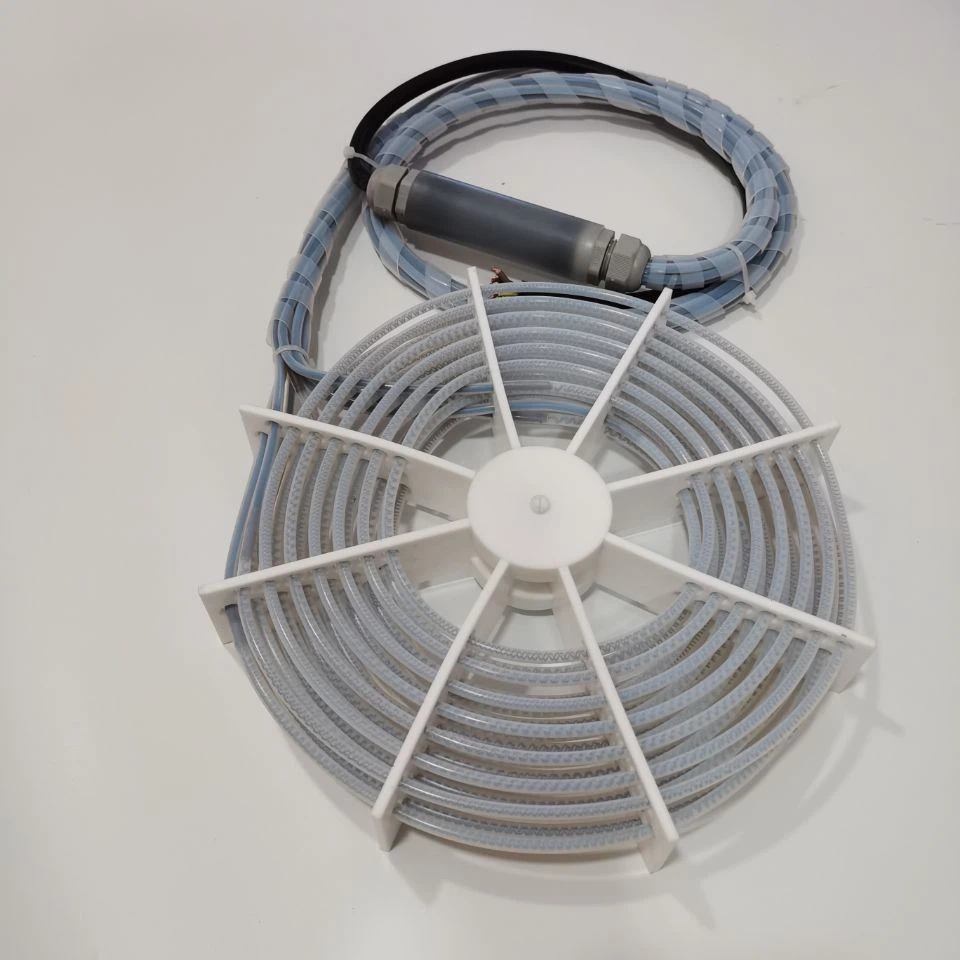
The installation and maintenance of PTFE heating coils need to be flexibly adjusted in combination with their material properties and application environment. Correct installation + regular maintenance can extend their life to more than 5 years, while ignoring details may lead to frequent failures.