Introduction: Why Price Isn't One-Size-Fits-All
When sourcing finned tubular heaters for your OEM equipment, you'll encounter a wide range of prices. A low initial cost might be tempting, but it can lead to higher expenses down the line through inefficiency, frequent replacements, and system downtime.
At Jaye-Heater, we believe in transparency. The price of a finned heater is a direct reflection of its quality, performance, and longevity. Understanding the key cost drivers empowers you to make an informed investment that optimizes your total cost of ownership.
Here are the 5 critical factors that influence the price of your custom finned tube heater.
Factor 1: Material Selection: The Foundation of Performance and Cost
The materials used for the sheath (the outer tube) and the fins are the most significant cost factors. The choice is dictated by the operating environment and the medium being heated (air, gas, corrosive chemicals, etc.).
- Standard vs. Premium Alloys: Stainless Steel (SS304/SS316) is a common choice for non-corrosive environments. However, if your process involves corrosive gases or moisture, a Incoloy® sheath (e.g., Incoloy 800 or 840) is necessary. While premium alloys cost more upfront, they prevent premature failure, saving you money in the long run.
- Fin Material: Aluminum fins offer excellent thermal conductivity at a lower cost, ideal for heating air and gases. For high-temperature or corrosive applications, stainless steel or copper fins are required, which increase the price but are essential for durability.
The Jaye-Heater Advantage: We don't upsell on materials. We perform a thorough analysis of your application to recommend the most cost-effective material that guarantees reliability, avoiding both over-engineering and under-performing solutions.
Factor 2: Design Complexity and Customization
An off-the-shelf, straight-line heater is relatively simple to produce. A custom-designed heater tailored to your specific OEM requirements involves more engineering time and complex manufacturing, which impacts the price.
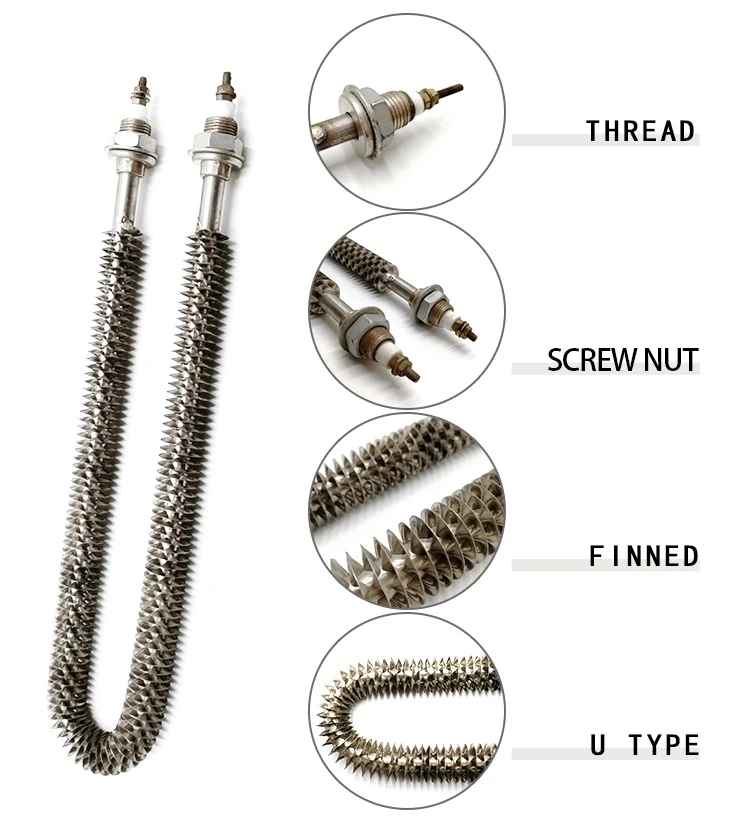
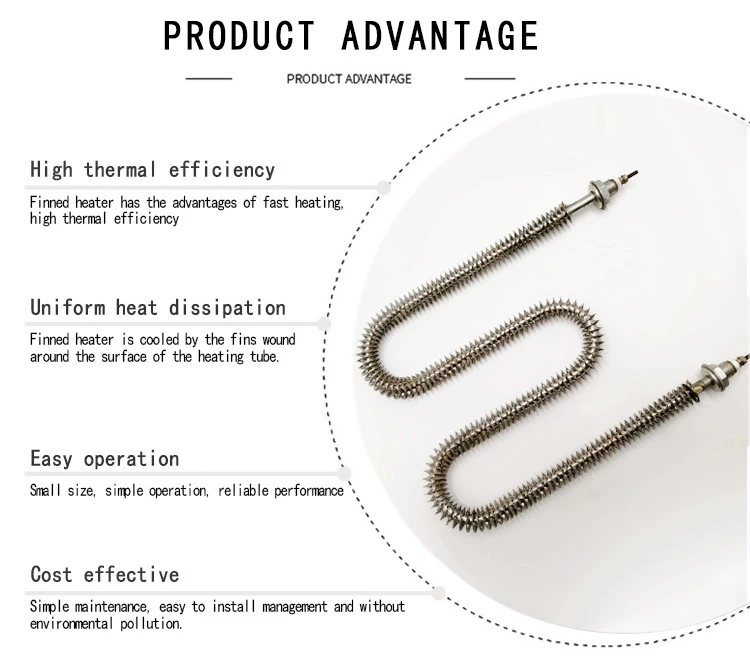
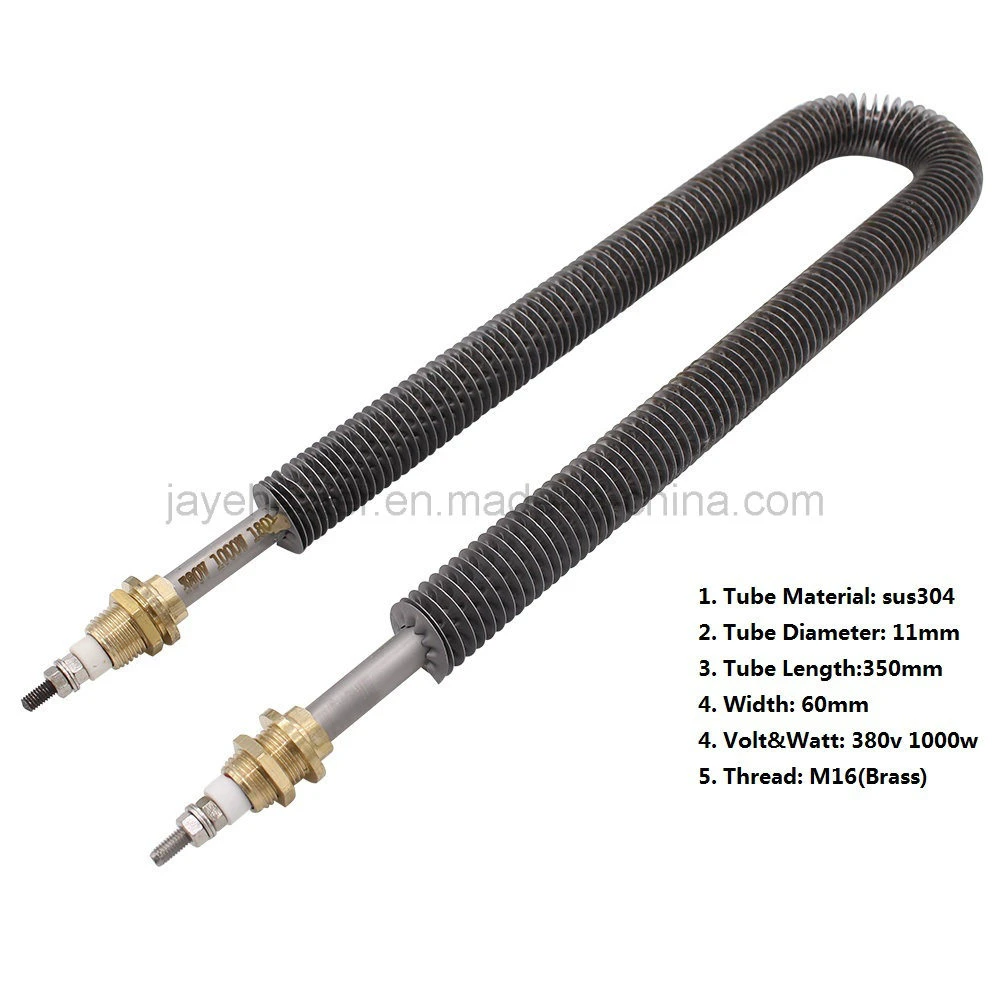
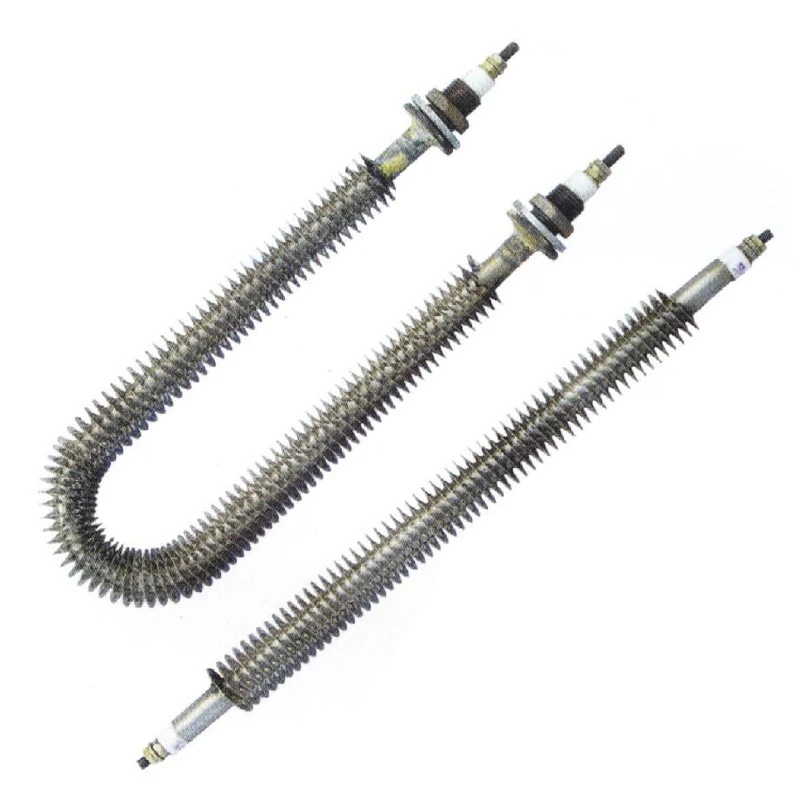
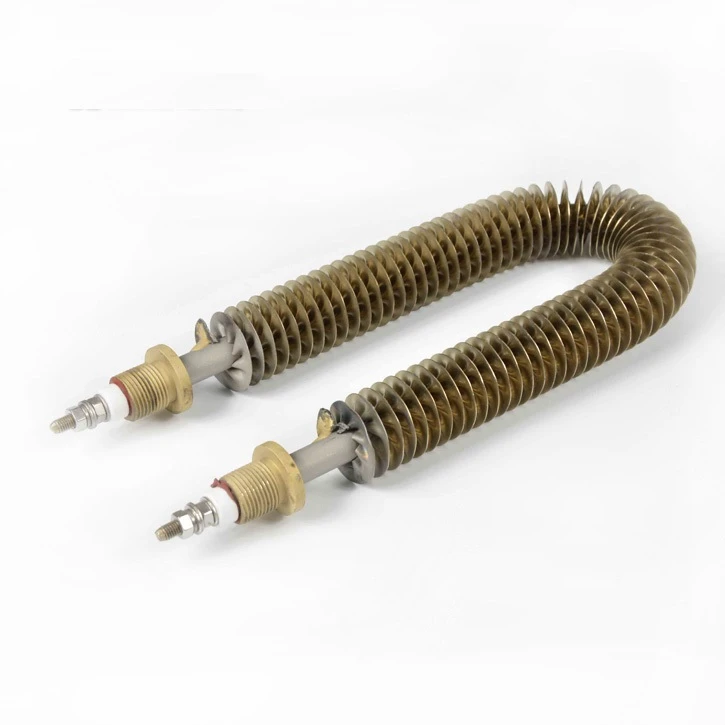
- Geometry: A simple straight or "U"-shaped heater is standard. Complex shapes like "W" patterns, spiral forms, or custom bends to fit into tight spaces require specialized tooling and labor.
- Fin Configuration: The fin density (fins per inch), height, and thickness are precisely calculated for optimal heat transfer. Custom dies for unique fin designs add to the cost but are crucial for efficiency.
Factor 3: Production Volume and Economies of Scale
This is a fundamental principle of manufacturing. Higher volume orders significantly reduce the unit cost.
- Prototype/Small Batch: Low-volume production runs have higher fixed costs per unit (e.g., setup, tooling, engineering hours).
- Large-Scale OEM Production: For ongoing, high-volume projects, we achieve economies of scale. The fixed costs are amortized over a larger number of units, resulting in a much more competitive price per heater.
The Jaye-Heater Advantage: As a dedicated OEM partner, we are structured to offer highly competitive pricing for large-scale production while maintaining unwavering quality control.
Factor 4: Manufacturing Processes and Quality Standards
The method used to attach the fins to the tube and the overall quality control rigor directly affect performance, lifespan, and cost.
- Fin Attachment: Mechanical bonding (where fins are pressed onto the tube) is cost-effective for many applications. Laser welding provides an indestructible bond for high-vibration or extreme temperature applications but is a more expensive process.
- Quality Assurance: A lower-priced heater might skip critical steps like 100% electrical testing, helium leak testing for integrity, or detailed metallurgical certifications. At Jaye-Heater, these rigorous QA protocols are non-negotiable, ensuring you receive a safe and reliable product every time.
Factor 5: Certifications, Lead Times, and Additional Services
Finally, "hidden" factors related to project management and compliance can influence the final quote.
- Certifications: If your industry requires specific safety or quality certifications (e.g., ATEX for explosive atmospheres, UL/CE marks), the additional testing and documentation incur costs.
- Lead Time: A standard lead time allows for efficient production scheduling. Rush orders that require expedited shipping and overtime labor will naturally cost more.
- Value-Added Services: Comprehensive technical support, custom packaging, and detailed installation guidance are services that add value and are reflected in the partnership-oriented pricing.
Conclusion: It's About Value, Not Just Price
The price of a finned tube heater is a composite of engineering, materials, and craftsmanship. Choosing the cheapest option often means compromising on one or more of these critical factors, leading to higher long-term costs.
At Jaye-Heater, we partner with you to find the optimal balance. We engineer heaters that deliver maximum value-superior efficiency, extended service life, and perfect integration-providing you with the lowest total cost of ownership.