Nov 06, 2026
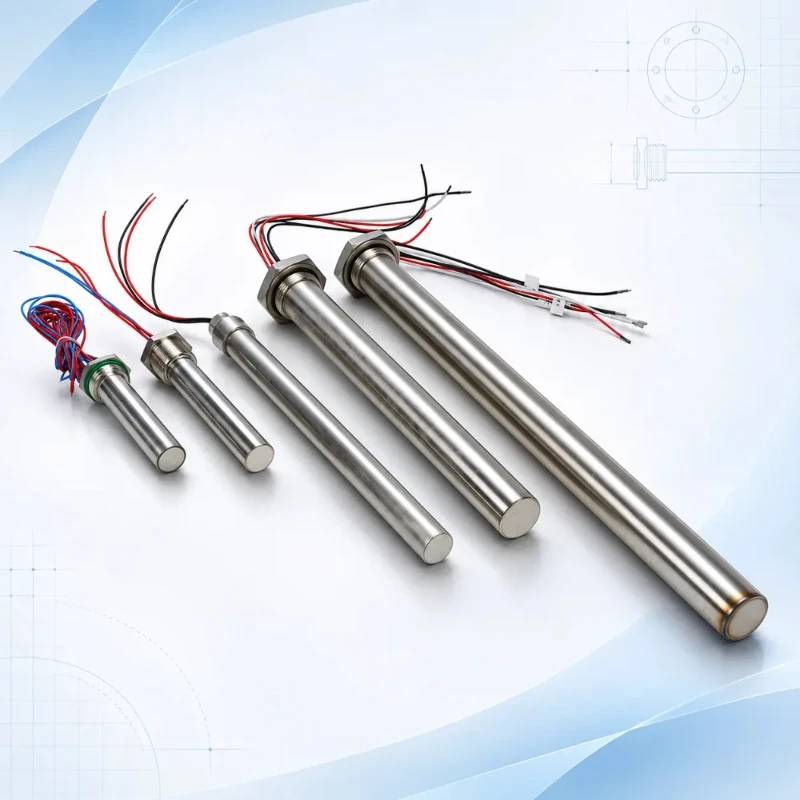
A PTC immersion heater transfers heat directly to liquid through a submerged sheath. It can be evaluated for hot-water tanks, parts washers, coolant reservoirs and compatible oil or process baths. Start with three details: the liquid composition, the time allowed to reach the target temperature and the lowest liquid level during operation. Together, they guide the choice of sheath material, heating power and mounting position.
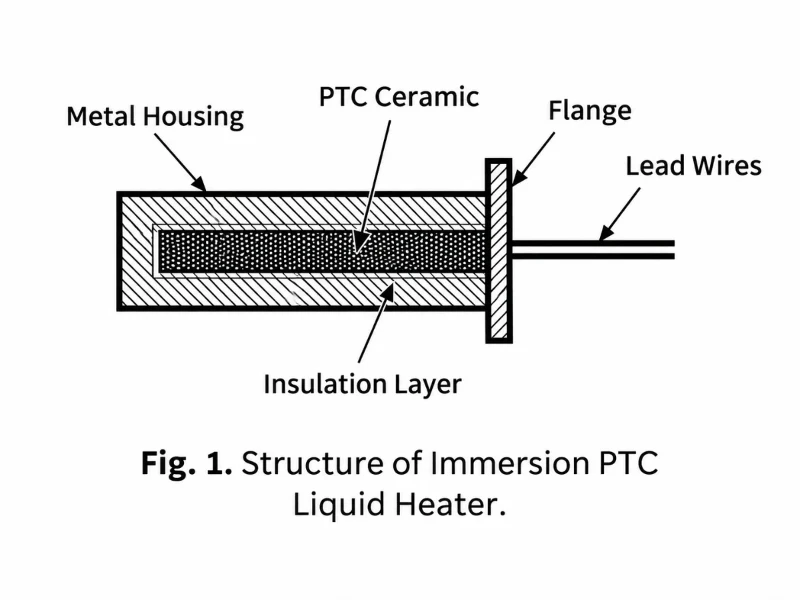
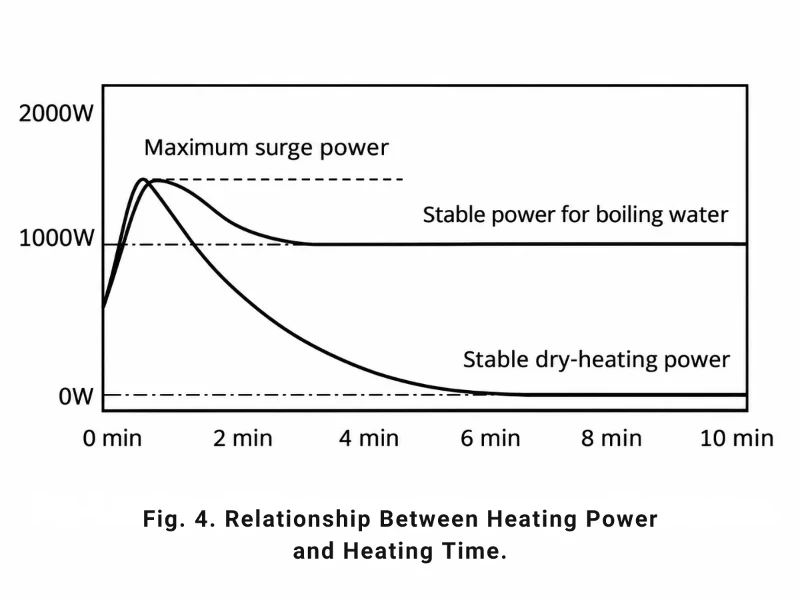
PTC stands for positive temperature coefficient. As the ceramic element enters its self-regulating temperature range, its electrical resistance increases. At a fixed supply voltage, it draws less power. Heat passes from the ceramic through the insulating layer and housing into the liquid.
The applications below are examples to evaluate. Confirm suitability for the exact heater model, liquid formulation, temperature and installation conditions before specifying a unit.
|
Application |
What to confirm |
|
Hot-water tanks and parts washers |
Check the fill volume, water chemistry and cleaning additives. For potable water, verify the applicable requirements for all wetted materials. |
|
Coolant reservoirs |
Specify the coolant formulation and concentration, cold-start temperature and circulation conditions. |
|
Hydraulic oil and lubricant reservoirs |
Confirm the oil grade, cold-start viscosity and maximum allowable heater surface temperature for the fluid. |
|
Plating tanks and other process baths |
Provide the bath chemistry, concentration and temperature. Verify compatibility for the sheath, seals and other wetted parts. |
For a tank that heats a batch of water, size the heater around the working fill volume and the time allowed for the coldest expected fill to reach the target temperature. If the tank also needs to maintain that temperature during use, check the holding duty separately. Heat loss and cold water entering during refill can increase demand.
Worked example · A tank holding 10 L of water needs to heat it from 20°C to 60°C in 30 minutes. Using approximately 10 kg of water, a specific heat capacity of 4.18 kJ/(kg·°C), and a temperature rise of 40°C, the water needs 1,672 kJ of heat.
When sizing the heater, also account for heat absorbed by the tank and heat lost to the surroundings. Ask for the model's power data at your supply voltage across the 20°C to 60°C water temperature range. Check startup current separately, then verify the 30-minute heat-up time with the intended fill volume and mounting position.
Start with the oil grade, the lowest expected oil temperature and whether the pump circulates oil during warm-up. Cold, viscous oil moves less readily around the heater, so the oil near the sheath can get much hotter than the bulk fluid. Confirm the allowable sheath surface temperature and watt density for the oil and the expected circulation conditions. If the heater runs before the pump starts, give the supplier that condition when requesting a model recommendation.
Choose direct immersion when the heater can transfer heat into the liquid held in a tank. For a system that needs to heat fluid as it moves through a line, evaluate a flow-through PTC heater. Confirm the model's allowable flow range, pressure rating and required flow protection.
Follow the mounting orientations permitted for the model. Keep the entire active heating section below the lowest operating liquid level. Check what happens while the tank fills, operates, and drains.
For a through-wall installation, verify the seal and required clearance. If the tank has a threaded port, review the NPT or BSP threaded PTC immersion heater and confirm the thread standard and size.
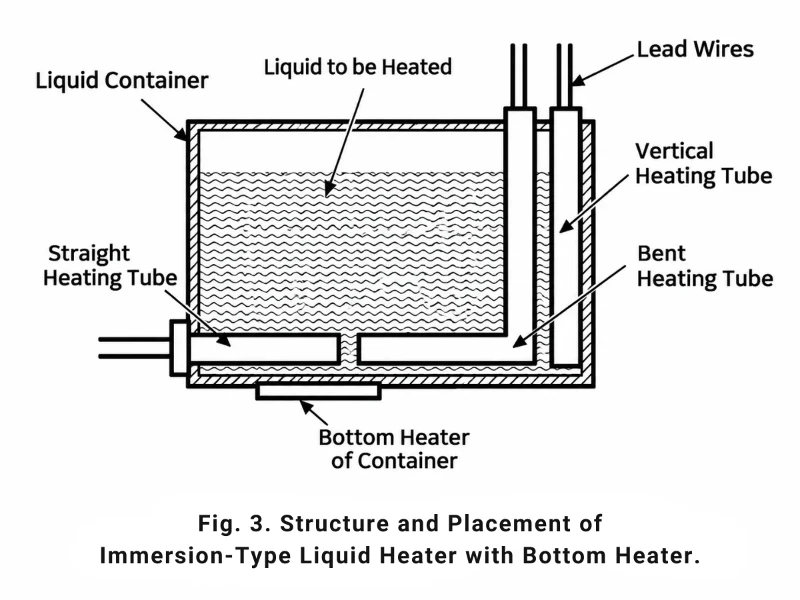
If the heater sits near the tank bottom, account for deposits that can collect beneath it. For tanks with limited circulation, check whether the upper and lower layers reach different temperatures before choosing where to put the control sensor.
Check startup current separately when sizing the power supply, wiring and switching devices. Follow the model's installation instructions and applicable requirements for grounding, electrical protection and keeping terminals dry.
Use a liquid temperature sensor and controller when the process needs a specific setpoint. Provide an independent high-temperature cutoff appropriate to the equipment. Where the active heating section could be exposed, use a low-liquid-level cutoff to de-energize the heater before that happens.
Q1. Can the same PTC immersion heater heat water, coolant and oil?
A: Only if the model is approved for each fluid under the intended operating conditions. Confirm sheath and seal compatibility and verify heating performance for each liquid.
Q2. How do I choose the wattage for my tank?
A: Estimate the liquid's heat-up load, allow for the tank and heat losses, then check the model's power data over the intended temperature range. Verify startup current separately.
Q3. Does a self-regulating PTC immersion heater need a thermostat?
A: Use a sensor and controller if the liquid must hold a set temperature. The PTC ceramic regulates its power in response to its own temperature.
Q4. Can a PTC immersion heater run dry?
A: Keep the active section submerged unless the manufacturer explicitly rates the model for dry operation under your installation conditions. A low-liquid-level cutoff can shut off power before exposure.
Q5. Can I mount the heater horizontally or vertically?
A: Follow the orientations specified for the model. In either position, check minimum immersion depth, clearance, sealing and terminal protection.
Q6. When should I use a flow-through PTC heater instead?
A: Consider a flow-through model when the fluid needs heating as it circulates through a line. Verify the flow range and pressure rating for that model.
See the Jaye Heater PTC Immersion Heater. For an application review, send your liquid composition, tank dimensions, fill volume, minimum liquid level, supply voltage, starting and target temperatures, required heat-up time and mounting drawing. Contact Jaye Heater.

Send Jaye Heater your liquid type, fill volume, supply voltage, target temperature, and required heat-up time. Include a mounting drawing if available so we can help you select a heater that fits your application.
Previous: No Information
Next: JAYE Tubular Heater vs EGO Tubular Heater: Small Appliance Use