Oct 29, 2025
The electric vehicle (EV) revolution is accelerating, but one of the most persistent challenges for engineers remains battery thermal management (BTM). While cooling batteries is often the focus, effective cold-weather performance is equally critical. A cold lithium-ion battery suffers from reduced capacity, sluggish charging, and increased degradation.
The solution? Proactive, precise, and efficient heating. At JAYE-HETAER, we engineer advanced thermal solutions that address this exact problem. This article explores how custom Polyimide Film (Kapton) Heaters are becoming the preferred technology for sophisticated EV BTM systems.
When temperatures drop, the electrochemical reactions inside a lithium-ion cell slow down. This leads to three major operational headaches:
Engineers might consider various heating methods, but many introduce new problems:

Custom-engineered Polyimide Film (Kapton) Heaters are uniquely suited to overcome these limitations. Here's how our tailored approach makes the difference:
1. Ultra-Fast Thermal Response & Uniform Heat Distribution
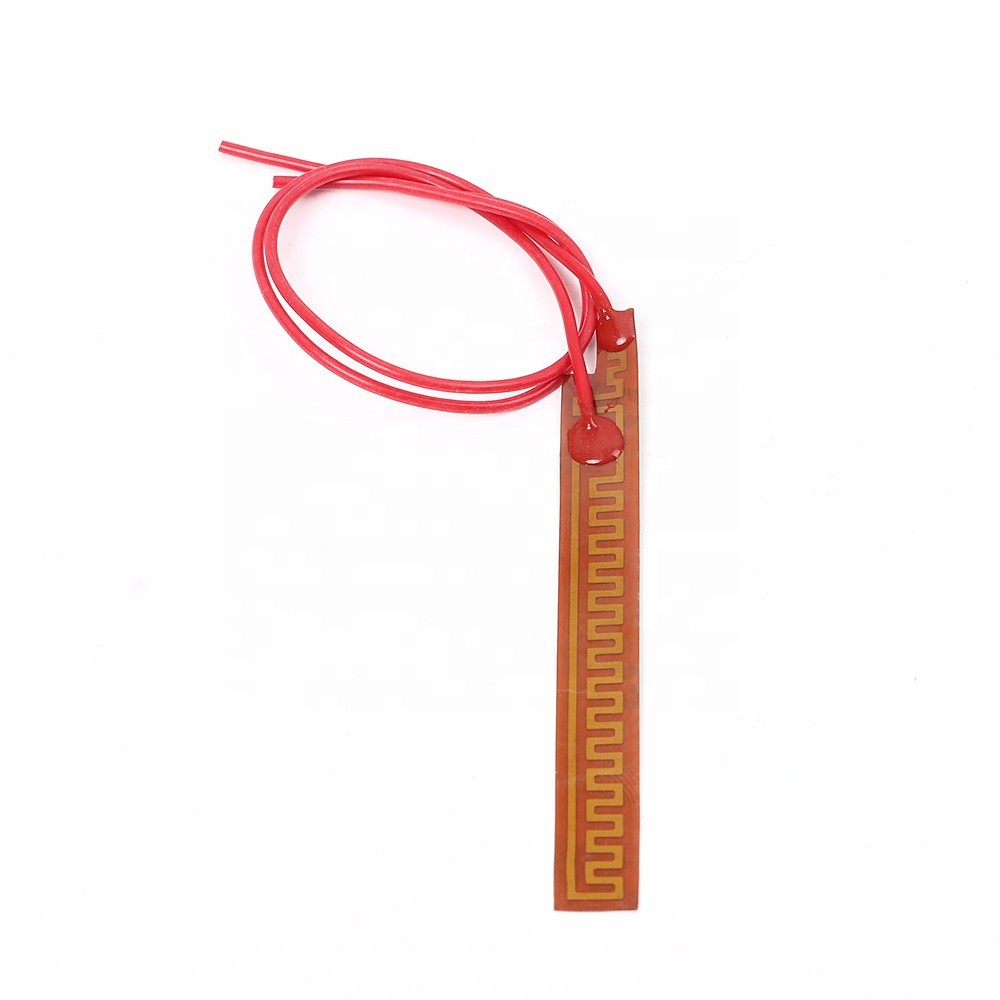
The core of our heaters is a precision-etched foil element laminated between ultra-thin Polyimide films. This design creates an extremely low thermal mass, allowing the heater to transfer energy to the battery cells in seconds, not minutes. Furthermore, we can computationally design the etched pattern to ensure perfectly uniform heat distribution across the entire cell surface. This eliminates damaging hot spots and ensures every cell is warmed evenly, which is crucial for pack balance and longevity.
2. Ultra-Thin, Lightweight, and Space-Efficient
Every millimeter and gram counts in an EV battery pack. Our Kapton heaters can be produced with a total thickness of less than 0.2mm, conforming perfectly to cell surfaces without adding significant bulk or weight. This allows for seamless integration into existing module designs without compromising energy density.
3. Exceptional Dielectric Strength and Safety
Battery packs operate at high voltages (400V+). The polyimide film is an outstanding electrical insulator, withstanding dielectric strengths of >2,500 VAC. This provides a critical safety barrier, preventing short circuits within the high-voltage environment of the battery pack.
4. Superior Chemical and Moisture Resistance
Kapton is inherently resistant to battery electrolytes, coolants, and moisture. This ensures long-term reliability and performance, preventing degradation from incidental exposure within the pack.
5. Integrated Intelligence for Smart Thermal Management
This is where true customization shines. We don't just sell a heater; we provide an integrated thermal system. We can laminate Negative Temperature Coefficient (NTC) thermistors or RTDs (Resistance Temperature Detectors) directly onto the heater film. This enables closed-loop feedback control, allowing the Battery Management System (BMS) to monitor temperature in real-time and adjust the heating output with precision, maximizing efficiency and safety.

In the competitive EV landscape, optimizing cold-weather performance is no longer a luxury-it's a necessity. Custom Kapton Heaters from JAYE-HETAER offer a sophisticated, reliable, and efficient solution to the critical challenge of battery pre-heating. By enabling faster charging, preserving range, and extending battery life, they are a key enabling technology for the next generation of electric vehicles.
Previous: What Every Manufacturer Should Know About the Heating Elements in Ariston Water Heaters?
Next: How Long Do Heating Elements Last? A Quick Guide by Appliance