Aug 01, 2023
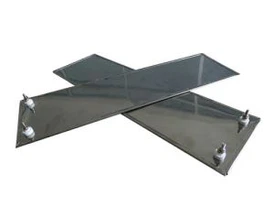
Strip heaters are electric heating devices with a flat metal strip inside a protective sheath. They are versatile and used in industries like plastics, packaging, and electronics. Strip heaters come in two types: finned and non-finned. They offer even heat distribution, quick response, and are controlled with thermostats or temperature controllers. Proper insulation and controls are essential for safe operation.
Here are some key points about strip heaters:
1. Types of Strip Heaters: There are two primary types of strip heaters: finned strip heaters and non-finned strip heaters. Finned strip heaters have added fins on the surface, which increase the surface area and enhance heat dissipation. This design is useful when forced convection is required. On the other hand, non-finned strip heaters are simpler in design and are commonly used for direct heating applications.
2. Temperature Control: Strip heaters are typically designed to operate at high temperatures and can be controlled using various methods, such as thermostats, temperature controllers, or integrated thermocouples, depending on the specific application.
3. Installation: Installing a strip heater is usually straightforward. They can be bolted onto a surface or inserted into a groove designed to hold the heater in place securely.
4. Advantages: Strip heaters offer several advantages, including high efficiency, quick heating response, even heat distribution, and reliability. They can provide a cost-effective heating solution for various industrial processes.
Overall, strip heaters are essential components in many heating applications, offering a reliable and efficient way to generate and control heat for a wide range of industrial processes and equipment.
Previous: Can strip heaters be used in food processing applications?
Next: No Information