Oct 27, 2026
When selecting an industrial heating element, OEM engineers need to consider more than the initial purchase price. Heating performance, installation requirements, material compatibility, and long-term operating costs all play a role in choosing the right solution.
Watlow FIREBAR® is a flat tubular heating element designed for industrial applications that require efficient heat transfer within a compact installation space. For equipment manufacturers exploring different heating solutions, understanding the available heater designs can help identify options that meet their technical and commercial requirements.
JAYE Heater manufactures industrial heating elements, including flat tubular heaters, conventional tubular heaters, and immersion heating solutions. Depending on the application, these products may be worth evaluating as alternatives to existing heating components.
This guide explains the key design considerations when evaluating alternatives to Watlow FIREBAR and how OEM engineers can select a suitable heating solution for their equipment.
Watlow FIREBAR heaters feature a flat tubular design that provides a different heating surface geometry from conventional round tubular elements. This design can be useful in applications where available space, heating capacity, and heat transfer are important considerations.
FIREBAR products are available in different configurations for industrial heating applications, including liquid immersion.
Several design characteristics should be considered when evaluating this type of heater.
Flat tubular geometry
The flattened cross-section provides a different surface area-to-length relationship from a conventional round tube. Depending on the design, this can allow more heating surface to fit within a given installation space.
Heat transfer requirements
The heating surface, applied wattage, and movement of the surrounding medium all influence heat transfer. These factors are especially important when heating oils or other liquids that may degrade under excessive surface temperatures.
Installation configuration
The heater's dimensions, mounting method, terminal arrangement, and available installation space determine whether it can fit the intended equipment.
These characteristics provide a useful starting point for evaluating alternative heating elements. However, similar external shapes do not automatically mean two heaters deliver equivalent performance.
The most suitable alternative depends on the original heater's function and the operating conditions of the equipment.
| Heating solution | Potential applications | Important considerations |
|---|---|---|
| Flat tubular heater | Applications requiring a compact heating element with a flat cross-section | Surface area, dimensions, watt density, and mounting compatibility |
| Conventional tubular heater | General industrial heating and suitable liquid or surface heating applications | Tube diameter, heated length, heat transfer, and installation space |
| Flange immersion heater | Heating liquids in tanks and industrial process vessels | Flange dimensions, sheath material, immersion depth, and fluid properties |
| Finned tubular heater | Forced-air heating, industrial ovens, and drying equipment | Airflow, fin design, surface temperature, and required heat output |
| Custom heating assembly | OEM equipment with specific mechanical or electrical requirements | Design feasibility, manufacturing tolerances, testing, and production quantity |
JAYE offers different types of industrial heating elements, including flat tubular heaters, straight and formed tubular elements, finned tubular heaters, and immersion heaters.
A flat tubular heater is a logical starting point when the original application depends on a flattened heating surface. However, the final selection should be based on the actual technical requirements rather than the product category alone.
A conventional tubular heater or immersion assembly may also be appropriate in some applications, provided the design meets the necessary heat-transfer and installation requirements.
Before selecting an alternative, OEM engineers should identify the original heater's critical performance requirements.
The available heating surface affects how much heat can be transferred to the surrounding medium.
When comparing two heating elements, consider their effective heated surface area rather than relying on overall length alone. A replacement with a different geometry may require a revised power rating or installation arrangement.
Watt density refers to the electrical power applied per unit of heated surface area. It is an important factor in managing surface temperature and avoiding localized overheating.
For liquid heating applications, the appropriate watt density depends on the fluid's properties, operating temperature, circulation, and sensitivity to thermal degradation.
A replacement should be evaluated under the intended operating conditions to determine whether its surface loading is suitable.
The outer sheath must withstand the operating temperature and remain compatible with the heating medium.
Depending on the design and application, industrial heating elements may use stainless steel or high-temperature alloys such as Incoloy. The correct material grade should be selected according to the specific service environment.
JAYE can review sheath material requirements for suitable custom heating projects. Material availability and suitability should be confirmed during the quotation and engineering review process.
The original heater's voltage, wattage, resistance, current, terminal configuration, and insulation requirements should be documented before selecting a replacement.
A heater that fits mechanically may still behave differently if its electrical characteristics or thermal response do not match the existing equipment.
Engineers should also consider the available installation space, mounting arrangement, immersion depth where applicable, fluid circulation, and operating pressure.
For critical applications, sample testing under representative working conditions is recommended before approving a replacement for serial production.
When reviewing alternatives to an established heater design, OEM manufacturers often need a supplier that can balance technical requirements, customization, and purchasing cost.
JAYE Heater provides industrial heating elements for equipment manufacturers and industrial customers. Its products can be considered for projects involving new equipment, customized heating components, and replacement parts.
Purchasing cost is an important consideration for OEM manufacturers, particularly when heating elements are used repeatedly across production batches.
JAYE offers competitively priced industrial heating solutions. Depending on the specifications, order quantity, and commercial terms, a JAYE product may offer a lower purchase price than a comparable branded solution.
The comparison should always be based on equivalent functional requirements and appropriate quality criteria. A lower initial price is most useful when the product also meets the application's performance and reliability requirements.
Standard catalogue products may not suit every machine design.
JAYE can discuss customized dimensions, shapes, voltage, wattage, sheath materials, and terminal configurations for suitable heating applications.
This can be useful when an equipment manufacturer needs a heater that fits a specific installation space or is developing a revised design.
To assess feasibility, provide the existing heater drawing, product photographs, electrical specifications, and operating conditions.
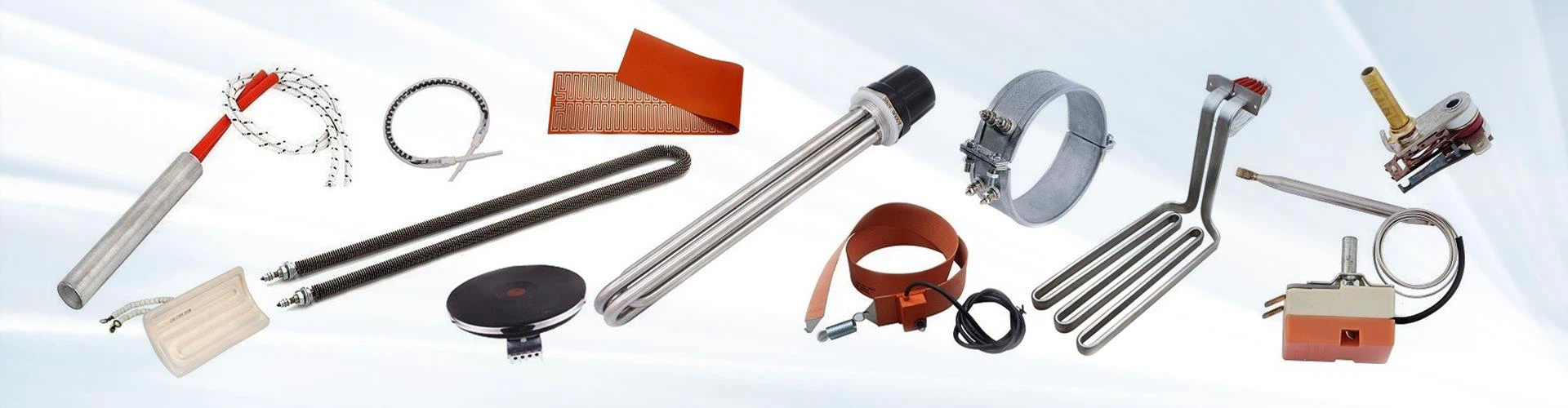
JAYE Heater Technology has been manufacturing heating elements since 2009. Its industrial heating product range includes tubular heaters, cartridge heaters, band heaters, immersion heaters, and other heating components.
For OEM projects, product evaluation should include the agreed dimensions, electrical tolerances, material specifications, and inspection requirements.
Where a replacement heater will be used in critical equipment, sample approval and application testing can help establish whether the proposed design meets the required performance criteria.
Some industrial machines use different types of heating elements in separate zones or assemblies.
JAYE's product range allows customers to discuss several heating requirements with one supplier, including:
Cartridge heaters for molds and precision heating.
Band heaters for cylindrical surfaces and plastic processing equipment.
Immersion heaters for compatible liquids.
Flexible heaters for applications requiring thin, adaptable heating elements.
Ceramic heaters for suitable industrial heating applications.
Tubular and finned heaters for different heat-transfer requirements.
The availability and suitability of each product depend on the application and the requested specifications.
A custom heating element may be worth evaluating when a standard product does not fit the equipment or when the original design needs to be adapted.
For example, OEM manufacturers may need to change the heater length, mounting configuration, terminal position, voltage, or power rating.
In these situations, the objective is not necessarily to reproduce another manufacturer's product exactly. Instead, it is to establish the technical requirements and develop a suitable heating element for the intended equipment.
JAYE can review the available specifications and discuss potential designs for suitable projects. The feasibility of a particular design depends on its geometry, materials, electrical requirements, manufacturing process, and required quantity.
For projects with strict operating limits, engineers should define the acceptance criteria before approving a new heater design.
To help identify a suitable alternative, OEM engineers should prepare the following information where available.
| Required information | Purpose |
|---|---|
| Original heater drawing or part number | Identifies the existing design |
| Overall dimensions and heated length | Helps assess installation fit and heating surface |
| Voltage and wattage | Establishes the electrical requirements |
| Resistance and current | Supports electrical compatibility checks |
| Sheath material | Helps evaluate environmental compatibility |
| Heating medium | Determines relevant heat-transfer and material requirements |
| Operating temperature and pressure | Defines important working conditions |
| Flow rate or circulation conditions | Helps evaluate heat transfer and surface temperature |
| Mounting arrangement | Confirms mechanical compatibility |
| Required quantity | Supports quotation and production planning |
If a complete drawing is unavailable, clear photographs, measurements, equipment details, and the existing heater nameplate can provide a useful starting point.
With this information, JAYE can review the requirements and advise whether a flat tubular heater, conventional tubular element, immersion heater, or custom design warrants further evaluation.
JAYE offers flat tubular heaters and other industrial heating elements that may be suitable for certain applications. Whether a particular JAYE product can serve as an alternative depends on the original heater's geometry, electrical specifications, heating medium, and operating conditions. A technical review is recommended before confirming suitability.
Not automatically. Two heaters with similar cross-sections may differ in surface area, internal construction, watt density, materials, and thermal performance. Equivalence must be assessed using the actual product specifications and, where necessary, application testing.
In some applications, a different heater geometry may be feasible. However, changing the cross-section can affect heating surface area, heat transfer, surface temperature, and installation requirements. Engineers should evaluate the complete design before making a substitution.
JAYE provides competitively priced industrial heating products and customized manufacturing solutions. Actual pricing depends on the specifications, materials, order quantity, and commercial terms. Customers can request a quotation based on their drawings and technical requirements.
Watlow FIREBAR has a distinctive flat tubular design for industrial heating applications. When evaluating alternatives, OEM engineers should focus on the heating requirements, surface geometry, materials, electrical characteristics, and installation conditions.
JAYE Heater offers flat tubular heaters, conventional tubular heating elements, immersion heaters, and customized industrial heating solutions. For manufacturers looking to review alternative designs, improve sourcing flexibility, or manage purchasing costs, JAYE is worth considering.
The most appropriate solution is the one that meets the application's technical requirements while providing a practical balance between product quality, reliability, and cost.
Looking for a suitable heating solution for your OEM equipment?
Contact JAYE Heater with your drawings, specifications, or existing heater details. Our team can review your requirements and help identify a suitable product for your application.

Upgrade your heating systems with Jaye Heater's premium components. For reliable heating elements and precise thermal controllers that ensure performance and safety, contact our experts today for a quote and technical support. Let's find your perfect heating solution.
Previous: How Aluminum Foil Heaters Work in FIR Heaters?
Next: How PTC Tubular Heaters Work in Condensate Evaporation Trays?