Dec 06, 2021
1. Do not let the leads hang loosely. Ensure that the lead wire is installed in a fixed position to prevent the flexible film heater heater from breaking when the lead wire is pulled.
2. Do not immerse the flexible film heater heater in liquid or expose the heater to steam and corrosive gas.
3. Do not operate the heater at a voltage higher than the specified or rated voltage.
4. Do not cut, perforate, disassemble the heater or try to repair a damaged heater and avoid contact with sharp objects. Damaged flexible film heaters will be unusable.
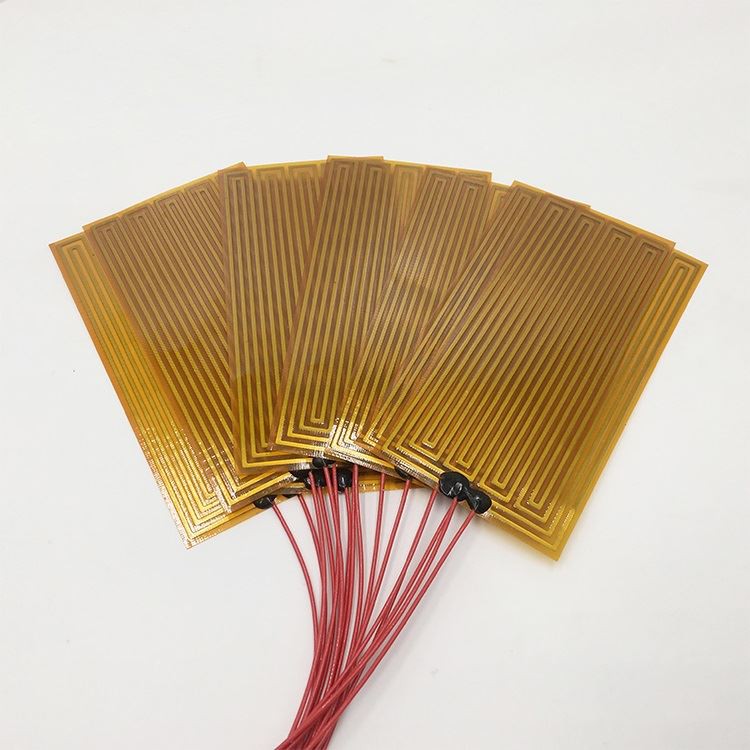
5. Unless adequate control devices are installed to ensure safety, do not let the heater run unattended.
6. Do not overlap the flexible film heater.
7. Do not try to repair damaged flexible film heaters.
8. Avoid exposing the heater to substances that may ignite or damage the heater.
9. The heater can be bent around a curved surface; however, do not exceed the minimum bending radius (R0.5mm).
10. When connecting two connecting surfaces, make sure that the connecting angle is blunt to prevent the heater surface from being damaged or punctured.

11. When the power density is greater than 0.4W/cm 2, the flexible film heater heater must be connected to a suitable radiator and should not be installed independently in the air, especially for high-power density heaters, which require effective heat conduction Or connect to the thermal controller.
12. Be careful when attaching the flexible film heater to a flat or curved surface. The heater can be connected by mechanical clamping, using factory-applied pressure sensitive adhesive (PSA) or a thin layer of conductive epoxy. Make sure that the entire heater is in contact with the surface and there are no air bubbles underneath. This is especially important for high power density heaters (ie, heaters with a power density of 10W/cm 2) to prevent heater failure. Also make sure that the terminals and leads are not in contact with the metal plate (when clamped) and the surrounding conductive metal.
13. Before disassembling the heater, make sure that the power is turned off and all components have cooled down before disassembling.
14. For heaters with high power density (>0.8W/cm 2), make sure to take adequate measures to control the temperature of the flexible film heater heater, and combine the heater with the metal plate and the recommended silicone pad or silicone adhesive Install.
Previous: What Are The Practical Functions Of Aluminum Foil Heaters?
Next: Quality Inspection Methods And Characteristics Of Electric Heating Tubes