Nov 16, 2026
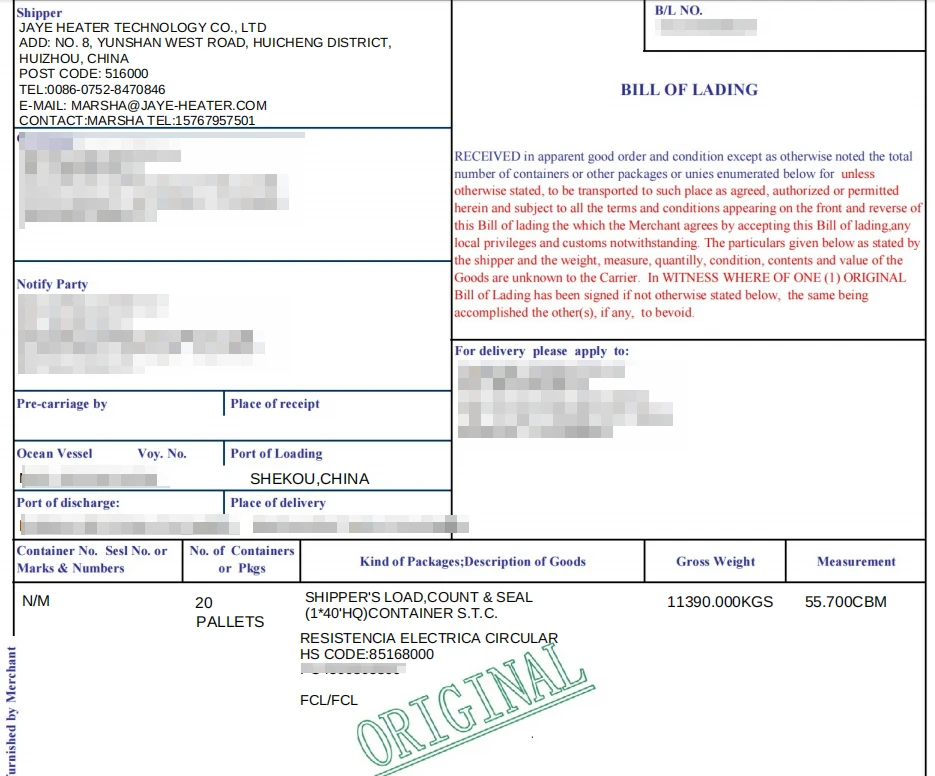
We are pleased to announce the successful loading and shipment of a full 40-foot high-cube (40'HQ) container containing 20 pallets of custom-manufactured Burner Heating Elements (Circular Coil Heaters / RESISTENCIA ELECTRICA CIRCULAR).
The shipment departed for a leading home appliance manufacturer in South America. The client's identity is withheld for confidentiality. This large-scale export order highlights our robust manufacturing capacity, rigorous quality control, and ability to support the high-volume production demands of the global home appliance industry.
This case study explores the application environment, engineering requirements, manufacturing processes, quality testing, and exact shipment logistics behind this significant order.
The South American client is a prominent manufacturer of household appliances. Their product portfolio includes household electric ovens, electric stovetops (cookers), and portable space heaters, which are widely used in residential kitchens and homes across the region.
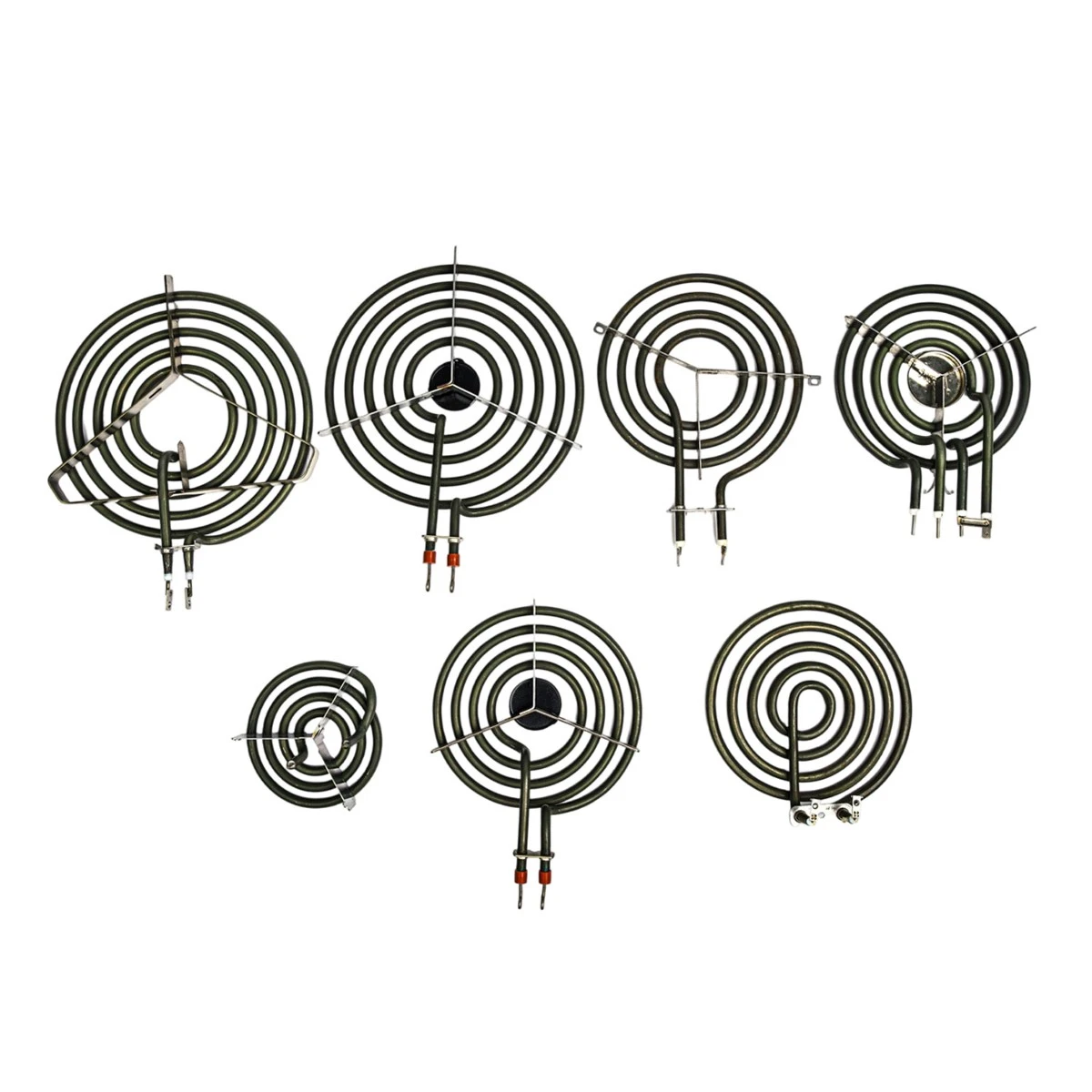
The specific product shipped-the Burner Heating Element, commonly known as a circular coil heater or "mosquito-coil" heater-is a core heating component in these home appliances.
The operating environment and requirements for home appliances are highly demanding:
Strict Safety Standards: Unlike industrial equipment, home appliances are used directly by consumers. The heating elements must provide absolute electrical insulation and safety to prevent any risk of electric shock.
Long-Term Durability: Household appliances are expected to operate reliably for years. The elements must withstand thousands of heating and cooling cycles without oxidation, wire breakage, or structural deformation.
Aesthetic and Dimensional Precision: For electric stovetops and ovens, the heating coils must fit perfectly into the appliance housing. Dimensional accuracy is critical for the assembly line and the final aesthetic appearance of the product.
Voltage Fluctuations: Power grids in some South American regions can experience fluctuations. The heating elements must be designed with adequate safety margins to handle these variances without premature failure or safety hazards.
To meet the strict requirements of the home appliance market, these burner heating elements cannot be standard off-the-shelf parts. They must be engineered precisely to the client's appliance design.
The client provided detailed technical drawings specifying the inner and outer diameters of the coil, the number of turns, the terminal length, and the mounting bracket configurations. Our engineering team worked closely with the client's R&D department to optimize the design for their specific appliances.
Key Engineering Parameters:
Coil Geometry: Precision-wound to ensure a consistent gap between turns. This is crucial for preventing electrical shorting and ensuring uniform heat radiation for cooking.
Resistance Wire Material: We utilized high-grade Cr20Ni80 (Nickel-Chromium) alloy wire, known for its excellent oxidation resistance, rapid heat-up time, and long service life.
Sheath Material: We selected high-quality stainless steel tubes to provide optimal thermal conductivity and to resist corrosion from food spills and moisture in a kitchen environment.
Terminal Design: Custom terminal blocks and high-temperature lead wires were configured to facilitate quick and secure installation on the client's home appliance assembly line.
Engineering Challenge Solved:
A 40'HQ container requires tens of thousands of units. In the home appliance industry, volume must not compromise quality. We addressed this by standardizing the tooling and implementing strict first-article inspection (FAI) procedures to guarantee absolute unit-to-unit consistency.
Filling a 40-foot container requires scale, but for home appliances, safety and reliability are paramount. Our manufacturing process followed a rigorous, multi-stage workflow to ensure that every single unit met the client's exact specifications and safety standards.
Step-by-Step Production & Testing Process:
1. Incoming Material Inspection: All resistance wire, stainless steel tubes, and magnesium oxide (MgO) powder undergo strict incoming quality control (IQC). We verify the wire diameter, resistance per meter, and chemical composition to ensure the final element will meet the power requirements.
2. Precision Winding: The Cr20Ni80 resistance wire is wound onto a precision lathe. The winding tension is carefully monitored to avoid micro-cracks and to ensure the exact resistance value (Ohms) is achieved.
3. Sheath Assembly and Filling: The wound element is inserted into the metal sheath, and high-purity MgO powder is compacted inside to provide electrical insulation while maximizing thermal conductivity.
4. Coil Forming: The straight tube is formed into the specified circular "mosquito-coil" shape. This requires specialized bending machinery to prevent the sheath from crimping or the internal wire from shorting against the metal wall.
5. Resistance Testing: Every single element is tested for its cold resistance. If the resistance falls outside the ±5% tolerance, it is rejected.
6. High-Voltage (Hi-Pot) Dielectric Testing: To ensure consumer safety, every unit undergoes a high-voltage insulation test to confirm there are no electrical leaks between the resistance wire and the outer sheath.
7. Thermal Cycling & Wattage Test: Batch samples are powered up to verify the actual wattage output and to test for even heat distribution. They are subjected to rigorous thermal cycling to simulate years of household use.
8. Final Visual Inspection: A rigorous inspection is conducted for surface defects, weld integrity, terminal orientation, and dimensional accuracy against the appliance drawings.
Heating elements are sensitive to mechanical shock and vibration during ocean transit. To protect the elements in a massive FCL (Full Container Load) shipment, we designed a robust export packing solution.
The circular coil elements were carefully secured in heavy-duty export cartons with custom padding to prevent deformation. The cartons were then stacked onto 20 heavy-duty pallets, tightly wrapped in plastic film, and reinforced with packing straps to ensure stability inside the container.
Official Shipment & Packing Data
| Item | Description | HS Code | Container Type | Quantity | Gross Weight | Measurement |
|---|---|---|---|---|---|---|
| BHE-Circular | RESISTENCIA ELECTRICA CIRCULAR (Burner Heating Element / Circular Coil Heater) | 85168000 | 1 × 40'HQ | 20 Pallets | 11,390.00 KGS | 55.700 CBM |
Sourcing heating components from overseas for home appliance production requires immense trust. A single defective batch can halt an entire assembly line and lead to costly recalls. The South American client chose our company based on our proven track record in thermal engineering, our transparent communication, and our ability to handle high-volume orders with rigorous safety testing.
"This 40'HQ container shipment is a testament to the client's confidence in our manufacturing capability," said our Export Manager. "We understand the safety and reliability requirements of the home appliance industry. By working closely with their engineering team and applying strict 100% Hi-Pot testing to every single element, we ensure that they can receive this massive shipment and move it directly to their assembly line with total peace of mind."
Whether it is a small sample order for appliance prototype testing or a full 40-foot container for mass production, we treat every order with the same level of strict quality control and engineering support. We are proud to be a reliable supply chain partner for home appliance manufacturers worldwide.
Are you a home appliance manufacturer looking for a reliable, high-capacity supplier for burner heating elements, circular coil heaters, or custom electric heating solutions?
Contact us today with your drawings or specifications. Our engineering team is ready to provide a rapid technical review, a sample verification plan, and a competitive quotation for your next production program.
Request a technical review and quote today.
Q1: Can these Burner Heating Elements be customized for our specific home appliance models?
A: Yes, absolutely. We do not offer standard "off-the-shelf" parts. All our burner heating elements are manufactured strictly based on the client's technical drawings, including coil diameter, number of turns, wattage, voltage, terminal design, and sheath material. Our engineering team works closely with your R&D department to ensure a perfect fit for your appliances.
Q2: What is your production capacity for large-volume orders, and what is your standard lead time?
A: As demonstrated by our recent 40'HQ container shipment (20 pallets, 11,390 kg), we are fully equipped to handle mass production for major appliance manufacturers. While we accept sample orders for prototype testing, our factory is optimized for high-volume FCL (Full Container Load) orders. Standard lead times for container orders are typically 6 to 7 weeks, depending on the complexity of the drawings and current production schedules.
Previous: No Information
Next: 338 × 338 mm Mica Heaters To France For 3D Printing Equipment