Nov 02, 2026
Both JAYE and Watlow manufacture silicone rubber flexible heaters built on the same fundamental construction-a resistance element (wire-wound or etched foil) encapsulated between layers of fiberglass-reinforced silicone rubber. The meaningful differences for an OEM come down to customization depth, thickness options, moisture protection ratings, temperature ceiling interpretation, and application support. Neither product is universally "better"; the right choice depends on your pack architecture, volume, certification requirements, and how much engineering support you need from the supplier.
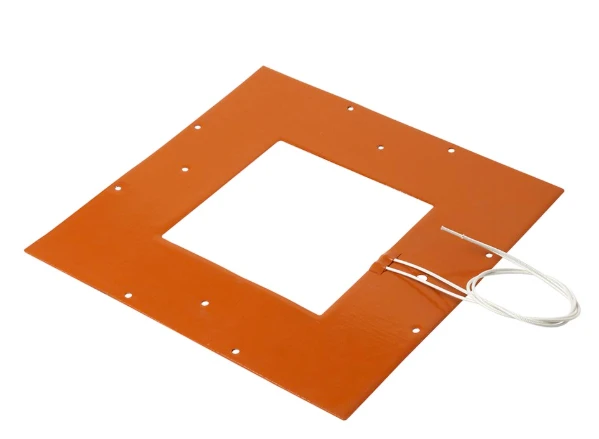
JAYE's silicone flexible heaters use a fiberglass cloth substrate laminated with flame-retardant silicone rubber (V0/V1 grade). The heating circuit is formed from nickel-chromium alloy wire or precision-etched foil, embedded between the silicone and fiberglass layers.
Standard operating temperature range is −60°C to 250°C, with short-term excursions up to 300°C available on some configurations. Standard thickness is approximately 1.5 mm, with options down to 0.8 mm for applications where low profile and flexibility are critical. Voltage is customizable from 3V to 660V AC/DC, and power density typically ranges from 0.03 to 2.5 W/cm². JAYE offers IP68-rated moisture protection on sealed configurations and reports thermal efficiency above 90% for well-bonded installations.
Watlow's silicone rubber flexible heaters use a similar construction: a wire-wound or etched-foil element laminated between silicone rubber layers. Watlow rates its silicone rubber heaters to 500°F (260°C), with maximum watt densities up to 80 W/in² in some constructions. Watlow offers both wire-wound and etched-foil element styles across the silicone rubber line, with options for pressure-sensitive adhesive backing, mechanical fastening, and integrated sensors.
Watlow's silicone rubber heaters are described as rugged, moisture- and chemical-resistant, and suitable for bonding directly to parts for effective heat transfer.
| Parameter | JAYE Silicone Flexible Heater | Watlow Silicone Rubber Heater |
|---|---|---|
| Base material | Fiberglass cloth + flame-retardant silicone (V0/V1) | Silicone rubber with wire-wound or etched foil |
| Standard temp range | −60°C to 250°C | Up to 260°C (500°F) |
| Typical thickness | ~1.5 mm (0.8 mm available) | Varies by construction; thin profiles available |
| Max watt density (reference) | 0.03–2.5 W/cm² | Up to 80 W/in² (≈12.4 W/cm²) in some styles |
| Voltage range | 3V–660V AC/DC (custom) | Application-specific |
| Moisture protection | IP68 available on sealed configurations | Silicone rubber is inherently moisture- and chemical-resistant |
| Element style | Wire-wound or etched foil | Wire-wound or etched foil |
| Certifications | Custom configurations; certification support available | UR, cUR, VDE, CE available on many styles |
| Adhesive options | Pressure-sensitive adhesive backing available | Pressure-sensitive adhesive backing available |
Key observation: The material construction is fundamentally similar. Both suppliers use silicone rubber as the encapsulant, both offer wire-wound and etched-foil elements, and both rate their silicone heaters in the same general temperature band (roughly 250–260°C continuous). The differences are in specification detail-thickness options, watt density limits, IP ratings, and certification support-rather than in the base material chemistry.
Both JAYE and Watlow position silicone flexible heaters for battery heating applications. The silicone construction provides environmental sealing, mechanical robustness, and dielectric strength-properties that matter in EV packs and stationary energy storage systems where condensation, vibration, and high voltage coexist.
JAYE's silicone flexible heater is explicitly positioned for EV battery heating, alongside industrial equipment, medical devices, and aerospace de-icing. The IP68-rated configurations are relevant for battery packs that see humidity or temperature cycling.
Watlow lists battery heating among typical applications for its flexible heater line. Watlow's silicone rubber heaters are suitable for bonding directly to battery module surfaces, with options for integrated temperature sensors.
For an OEM comparing the two for battery heating, the practical differences are:
Thickness and thermal mass: JAYE offers 0.8 mm thin configurations; Watlow's silicone line includes thin profiles but the specific minimum thickness depends on the construction. Thinner heaters have lower thermal mass and faster response.
Moisture protection: JAYE explicitly offers IP68-rated silicone heaters. Watlow describes silicone rubber as inherently moisture-resistant, but the specific IP rating depends on the construction and sealing method.
Customization depth: JAYE positions customization (voltage, wattage, shape, thickness) as a core offering. Watlow offers extensive customization as well, but as a larger supplier, minimum order quantities and lead times may differ.

Both suppliers serve medical and foodservice segments with silicone flexible heaters.
JAYE lists applications including incubators, blood analyzers, dialysis machines, dental water warming, and X-ray film processing, alongside industrial uses such as pipe and drum heating.
Watlow's silicone rubber heaters serve foodservice holding cabinets, medical blood analyzers, and respiratory therapy units. Watlow's broader portfolio includes polyimide heaters for medical and laboratory applications where low outgassing or very thin profiles are required-but that is a separate material category outside the scope of this silicone-only comparison.
For silicone-specific medical and foodservice applications, both suppliers offer suitable products. The decision often comes down to certification requirements (Watlow has established UR/cUR/VDE/CE recognition on many styles; JAYE supports custom certification configurations), volume, and the level of engineering support the OEM needs.
For washdown, condensation, and outdoor exposure, silicone rubber is the appropriate material choice from both suppliers.
JAYE offers IP68-rated silicone heaters and cites moisture and chemical resistance as core benefits. Watlow describes its silicone rubber heaters as rugged and moisture- and chemical-resistant, suitable for bonding to parts for effective heat transfer.
In industrial applications where the heater will be exposed to water, steam, or chemical splash, the specification should focus on:
The sealing method at the terminal end and lead exit
The IP rating of the completed assembly
The adhesive system and its compatibility with the mounting surface
The dielectric strength after humidity exposure
Both suppliers can meet these requirements with the right configuration. The OEM's job is to specify the requirements clearly and verify the supplier's test data.
Both use silicone rubber as the encapsulant, with a fiberglass reinforcement layer and a wire-wound or etched-foil resistance element. The base material category is the same; the specific formulations and construction details differ.
Both suppliers position silicone flexible heaters for battery heating. JAYE emphasizes IP68 sealing and thin-profile options, which suit packs exposed to humidity or with tight installation space. Watlow offers a broad flexible heater portfolio and established certification recognition. The right choice depends on your pack architecture, required IP rating, volume, and certification needs.
Both offer options for integrated temperature sensors-thermocouples, RTDs, or thermistors-in their silicone flexible heater constructions. Confirm the sensor type and placement with the supplier for your specific design.
Watlow publishes UR, cUR, VDE, and CE recognition on many of its flexible heater styles. JAYE supports custom certification configurations and should be asked for the specific certification documentation required for your target market.
Silicone rubber is the appropriate material category for these environments from both suppliers. The actual protection depends on the sealing method and the IP rating of the completed assembly-not the material alone. Specify the IP rating and verify the supplier's test data.
1-Jaye Heater Technology. Silicone Flexible Heater - Products Description and Specifications. Jaye Heater. https://www.jaye-heater.com/silicone-rubber-heater/silicone-flexible-heater.html
2-Watlow. Flexible Heaters - Silicone Rubber Heater Specifications. Watlow Flexible Heater Datasheet (via Branom). https://www.branom.com/web/content/product.datasheet/14574/product_datasheet/020100C1-E001P.pdf
3-Jaye Heater Technology. Silicone Battery Heater vs. PI Battery Heater: Which Design Fits Your Battery Application? Jaye Heater Knowledge, September 2026. https://m.jaye-heater.com/info/silicone-battery-heater-vs-pi-battery-heater-103690566.html
4-Watlow. Flexible Heaters - Silicone Rubber Construction and Applications. Watlow product literature.
Previous: EGO Heating Plate Alternative: JAYE Cost-Effective Hotplate
Next: EGO Heating Plate Replacement: Dimension & Power Matching Guide