11
Sep
 How Does a Capillary Thermostat Work with a Millivolt Gas Valve?
A millivolt gas valve can control a gas appliance without a conventional external electrical power supply. But how does the system know when to turn the gas burner on or off? A capillary thermostat can provide the temperature control by sensing temperature through a bulb and mechanically opening...
10
Sep
 Mica vs. Ceramic Band Heaters: Which Is Better for Extruders?
When selecting a band heater for a plastic extruder, mica and ceramic band heaters are two common options. Both are designed to heat extruder barrels and maintain the required processing temperature, but their construction, heating performance, temperature capability, and cost are different. So,...
10
Sep
 How High Temperature Plugs Work for Cable Machine Heaters?
High temperature plugs are important electrical connection components used in cable manufacturing machines, especially where heaters operate continuously at elevated temperatures. They provide a reliable connection between the heating element, temperature control system, and power supply while...
10
Sep
 How Silicone Heating Pads Work for Optical Equipment?
Silicone heating pads are flexible electric heaters designed to provide stable, uniform surface heating. In optical equipment, they are commonly used for temperature stabilization, condensation prevention, frost protection, and maintaining the operating temperature of sensitive optical...
09
Sep
 How Quartz Heating Tubes Improve Oven Performance?
In the world of electric ovens, the heating element is the heart of the appliance - it determines how quickly food cooks, how evenly heat is distributed, and ultimately, the quality of the final result. Among the various heating tube materials available today, quartz heating tubes have carved...
09
Sep
 How PTFE Enhances Corrosion Protection in the Chemical Industry?
PTFE in Corrosion Protection for the Chemical Industry Corrosion remains one of the most persistent and costly challenges in chemical processing. Equipment exposed to aggressive acids, bases, solvents, and high-temperature process streams demands materials that can withstand relentless chemical...
09
Sep
 How Mechanical Timers Work for Oven Control Modules?
A mechanical timer for an oven control module is a time-setting device that controls an oven's operating duration without requiring electronic programming. It uses mechanical components such as a spring, gears, cam, contacts, and a timer knob to measure time and switch the oven circuit on or...
08
Sep
 How to Choose Between Etched Foil and Wire-Wound Silicone Heaters for Freeze ...
Contents The Basic Difference Etched Foil: Precision and Uniformity Wire-Wound: Durability and Versatility A Practical Sizing Rule What Matters for Freeze Dryer OEMs What We Tell Our OEM Customers If you're designing freeze dryers, you already know the heating system is one of the most...
08
Sep
 How Silicone Heating Pads Provide Uniform Heat in Freeze Dryers?
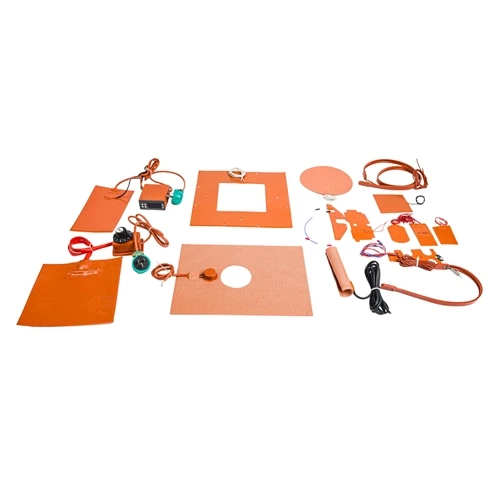
Contents The Freeze Dryer Heating Problem How Silicone Heating Pads Solve It The Numbers That Matter Why Uniform Heat Matters for OEMs The Two Common Silicone Pad Types What We Tell Our Freeze Dryer OEM Customers If you're designing freeze dryers for pharmaceutical, biotech, or food...
07
Sep
 What Applications Require High Power Oil Heating Elements?
High power oil heating elements are used when a large volume of oil needs to reach and maintain a specific temperature within a limited time. They are commonly found in commercial deep fryers, industrial food processing equipment, cooking machines, and other oil heating systems that require fast...
04
Sep
 Why Are Thick Film Heaters Used for Semiconductor Wafer Heating?
Contents Why Does Wafer Heating Require High Temperature Uniformity? What Is a Thick Film Heater? Why Are Thick Film Heaters Suitable for Semiconductor Wafer Heating? 1. Excellent Temperature Uniformity 2. Fast Thermal Response 3. Ultra-Thin and Compact Structure 4. High Energy Efficiency 5....
04
Sep
 Why Are Stainless Steel Heating Elements Used in Fryers?
Commercial fryers require reliable heating components to maintain stable oil temperatures during cooking and food processing. Among different heating solutions, stainless steel heating elements are widely used because they provide excellent corrosion resistance, high-temperature durability, and...
03
Sep
 How Carbon Fiber Heating Tubes Perform in Far-Infrared Sun Heaters?
Contents What Makes Carbon Fiber Different Far-Infrared: The "Life Light" Wavelength Instant Heat, No Surge The Quartz Envelope Advantage Longevity That Cuts Warranty Costs Where Carbon Fiber Tubes Fit in Sun Heater Design If you've ever stood in front of a sun heater and felt that...
03
Sep
 How Gold Reflectors Boost Sun Heater Heating Tube Efficiency?
Contents How a Gold Reflector Works The Numbers: How Much Efficiency Gain? Why Gold, Not Other Metals? Temperature Limitations What This Means for Sun Heater OEMs In a sun heater, the goal is simple: get as much infrared heat as possible from the heating tube to the person or object in front of...
03
Sep
 How Are X-Type Finned Tubular Heaters Used in Mobile Medical Vehicle Heating ...
Contents Why Do Mobile Medical Vehicles Need Efficient Heating? What Is an X-Type Finned Tubular Heater? Why Is the X-Type Fin Structure Important? Increased Heat Exchange Area Compact Heating Module Suitable for Forced-Air Heating Key Design Requirements 1. Customized Voltage and Power 2....
03
Sep
 Why Do Cartridge Heaters Burn Out Prematurely? 7 Common Causes and How to Pre...
A cartridge heater may have the correct voltage, wattage, and dimensions, but still fail much earlier than expected. Why does this happen? In most cases, premature failure is related to overheating, poor heat transfer, incorrect installation, or improper temperature control rather than simply a...
31
Aug
 Silicone Rubber Heaters: Flexible Heating Solutions for Cold Environments
Many industrial and commercial systems are installed outdoors and must operate reliably under changing weather conditions. During winter or in cold climate regions, low temperatures can create serious challenges for equipment operation. Water freezing, condensation, and temperature-related failures may affect the performance and service life of outdoor systems.Among different heating technologies, silicone rubber heaters provide a flexible and efficient solution for freeze protection applications. With their thin structure, excellent flexibility, and customizable design, silicone rubber heaters can be installed on various surfaces to provide controlled heating in cold environments.
31
Aug
 PTC Cartridge Heaters for Automotive Thermal Management Systems: Reliable Hea...
Temperature management has become increasingly important in modern automotive systems, especially with the rapid development of electric vehicles, hybrid vehicles, and advanced battery technologies.To maintain stable operating conditions, automotive manufacturers and system suppliers use different heating solutions as part of their thermal management systems. One compact heating component used in certain automotive applications is the PTC cartridge heater. With its tubular structure, self-regulating temperature characteristics, and flexible installation options, PTC cartridge heaters can provide localized heating for liquid-based thermal management systems, battery-related equipment, and other automotive components.
31
Aug
 PET Heating Film vs. PI Heating Film: Which One Is Better?
Flexible heating films are widely used for battery heating, electronic devices, medical equipment, automotive components, packaging, and other applications where a thin and lightweight heat source is required. PET heating films and PI (Polyimide) heating films are two common solutions. Although...
31
Aug
 PTC Cartridge Heaters for Instant Water Heating Systems: Safe and Efficient H...
Instant water heating technology has become increasingly popular in household appliances, commercial equipment, and portable heating systems. Unlike traditional water heaters that store and continuously maintain a large volume of hot water, instant heating systems heat water only when it is needed. This design provides advantages such as compact size, faster response, and improved energy utilization. However, designing a reliable instant water heating system requires a heating element that can provide fast heat transfer while maintaining safe operation. This is where PTC cartridge heaters become an effective heating solution. With their compact tubular structure, rapid heating capability, and self-regulating temperature characteristics, PTC cartridge heaters are widely used in compact water heating applications where safety, stability, and space efficiency are important.