How Capillary Thermostats Work: Understanding Auto-Reset and Manual Reset Functions?

Jan 21, 2026

Introduction to Capillary Thermostat Technology


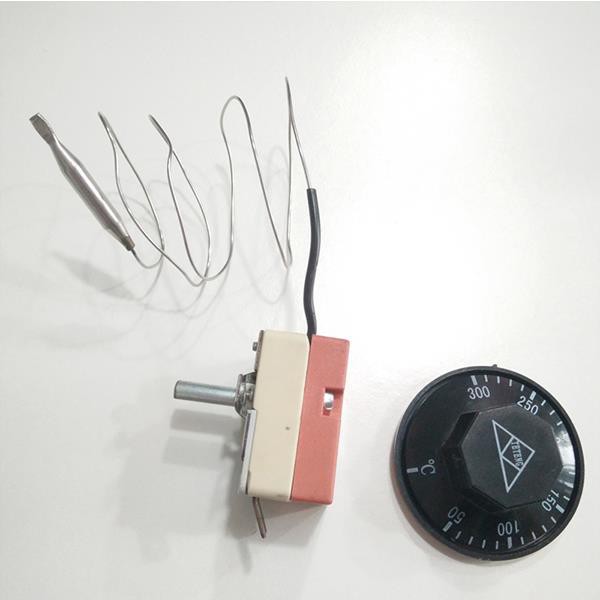
best-price-electric-oven-capillary-thermostat201810221434552453654

Capillary thermostats are precision temperature control devices that utilize a capillary tube and bulb sensing system to monitor and regulate temperature in various industrial and commercial applications. Unlike standard bimetal thermostats, capillary systems provide remote sensing capability, allowing temperature measurement at a distance from the control unit. The choice between auto-reset and manual reset functionality represents a critical design decision that impacts safety, operational efficiency, and application suitability across diverse thermal management scenarios.


Core Operating Principles


Sensing Mechanism and Working Fluid

Capillary thermostats operate based on the principle of thermal expansion. A sealed capillary tube connects the sensing bulb to a diaphragm or bellows assembly within the control head. The system is filled with a temperature-sensitive fluid (typically gas or liquid) that expands or contracts with temperature changes. This pressure variation actuates a snap-action switch mechanism, opening or closing electrical contacts at predetermined temperature setpoints.


Reset Function Fundamentals

The reset behavior determines how the thermostat returns to its normal operating state after tripping. Auto-reset​ models automatically re-close contacts when the sensed temperature drops below the reset differential (typically 5-20°C below trip point). Manual reset​ variants require physical intervention-usually pressing a reset button-to restore circuit continuity, even after temperature normalization. This fundamental difference dictates application suitability and safety protocols.

Auto-Reset Capillary Thermostats: Technical Specifications and Applications


Key Technical Parameters

Auto-reset capillary thermostats feature:

  • Automatic circuit restoration​ upon temperature decrease
  • Reset differential: 5-20°C (adjustable in some models)
  • No external reset mechanism required
  • Continuous cycling capability​ under normal operating conditions
  • Temperature range: Typically -40°C to +300°C
  • Capillary length: Standard 1-10 meters, custom lengths available

Typical Application Scenarios

These thermostats are preferred for:

  • HVAC systems​ (heating, ventilation, air conditioning)
  • Water heaters​ and thermal storage tanks
  • Industrial process control​ where temporary temperature excursions are acceptable
  • Refrigeration systems​ requiring automatic defrost cycles
  • Embedded thermal protection​ in machinery

Operational Advantages and Limitations

Benefits:

  1. Eliminates need for manual monitoring and reset
  2. Reduces maintenance intervention requirements
  3. Suitable for remote or unmanned installations
  4. Cost-effective for non-critical applications

Considerations:

  1. May cycle repeatedly if underlying fault persists
  2. Not suitable for applications requiring operator awareness of fault conditions
  3. Potential for equipment damage if fault goes undetected

Manual Reset Capillary Thermostats: Design Features and Deployment


Technical Characteristics

Manual reset models include:

  • Physical reset button​ or external actuator mechanism
  • Lock-out feature​ preventing automatic restoration
  • Visual trip indication​ (flag or color change)
  • Higher trip accuracy​ (±1-2°C typical)
  • Positive manual reset action​ requiring deliberate operator intervention

Application Domains

Manual reset is essential for:

  • Critical safety systems​ (boilers, pressure vessels)
  • Industrial machinery​ where automatic restart could be hazardous
  • Medical equipment​ requiring operator verification before restart
  • Applications requiring fault diagnosis​ and system inspection
  • Environments with frequent overload or fault conditions

Performance Characteristics

  • Strengths:

Prevents automatic restart after fault condition

Forces operator inspection and system verification

Reduces risk of equipment damage from repeated cycling

Suitable for high-reliability and safety-critical applications


  • Constraints:

Requires human intervention for system restoration

May cause extended downtime in remote locations

Higher initial cost compared to auto-reset models

Key Performance Parameters Comparison


Parameter

Auto-Reset

Manual Reset

Reset Mechanism

Automatic upon cooling

Physical button press

Reset Differential

5-20°C (typical)

N/A (manual action)

Trip Accuracy

±3°C typical

±1-2°C typical

Capillary Length

1-10m standard

1-10m standard

Temperature Range

-40°C to +300°C

-40°C to +300°C

Cycle Life

100,000+ cycles

50,000+ cycles

Application Focus

Convenience, automation

Safety, diagnostics

Cost Factor

Lower

Higher (15-30% premium)

Selection Criteria for Capillary Thermostats


Temperature and Sensing Requirements

  • Trip temperature setpoint: Must match application requirements
  • Reset differential: Critical for auto-reset models to prevent rapid cycling
  • Sensing bulb material: Stainless steel for corrosive environments, copper for general use
  • Capillary length and diameter: Based on installation distance and response time

Electrical Specifications

  • Voltage rating: 250V AC typical, higher ratings available
  • Current rating: 10-30A standard, depending on contact material
  • Contact configuration: SPST, SPDT, or DPST options
  • Electrical insulation: Class B or better for high-temperature applications

Environmental and Mechanical Considerations

  • IP rating: IP54 or higher for dust/moisture protection
  • Vibration resistance: Critical for motor and compressor applications
  • Chemical compatibility: Sensing bulb and capillary material selection
  • Mounting orientation: May affect accuracy in some designs

Installation and Commissioning Best Practices


Proper Installation Techniques

  • Sensing bulb placement: Ensure good thermal contact with measured medium
  • Capillary routing: Avoid sharp bends, mechanical stress, and temperature extremes
  • Control head mounting: Position away from heat sources and vibration
  • Electrical connections: Use appropriate wire gauge and terminal torque

Calibration and Testing

  • Setpoint verification: Use calibrated thermometer during commissioning
  • Functional test: Verify trip and reset operation at actual temperatures
  • Differential check: For auto-reset models, measure actual reset temperature
  • Seal integrity: Check for fluid leaks in capillary system

Maintenance and Troubleshooting

  • Periodic inspection: Check for physical damage, corrosion, or contamination
  • Contact resistance: Measure during maintenance cycles
  • Response time: Verify against manufacturer specifications
  • Common issues: Slow response, failure to trip, or inaccurate setpoint

Industry Standards and Compliance


Relevant International Standards

Capillary thermostats typically comply with:

  • IEC 60730​ (Automatic electrical controls)
  • UL 873​ (Temperature sensing controls)
  • EN 60730​ (European standard)
  • CSA C22.2 No. 24​ (Canadian standards)

Certification and Approval Marks

  • UL/CSA listed: Required for North American markets
  • CE marking: For European Union compliance
  • VDE approval: German electrical safety standard
  • RoHS compliance: Environmental directive compliance

Future Technology Trends

Smart Capillary Systems

Emerging developments include:

  • Digital setpoint adjustment: Field-programmable temperature settings
  • Remote monitoring: Communication interfaces for system integration
  • Diagnostic capabilities: Self-test and fault indication features
  • Enhanced materials: Higher temperature ranges and improved durability

Application-Specific Designs

  • Miniaturization: Smaller sensing bulbs for space-constrained applications
  • Specialized fluids: Improved response time and temperature range
  • Harsh environment versions: Enhanced corrosion resistance and sealing

Conclusion: Application-Driven Selection


Choosing between auto-reset and manual reset capillary thermostats requires careful evaluation of safety requirements, operational constraints, and maintenance capabilities.

Auto-reset models provide convenience and automation for applications where temporary temperature excursions are acceptable, while manual reset variants offer enhanced safety and diagnostic capabilities for critical systems.

By understanding the technical parameters, performance characteristics, and application scenarios, engineers can specify the appropriate thermostat type to ensure reliable temperature control and equipment protection.

As thermal management technology evolves, capillary thermostats continue to play a vital role in diverse industrial and commercial applications where precise remote temperature sensing is essential.

 

modular-1
One-stop Capillary Thermostats Factory in China

If you require heating elements, Jaye Heater-as a long-standing manufacturer of heating elements-will assist you with our team of professional technicians and sales personnel.


Related Products

Category

Product Recommended

  • Silicone Heating Strips in Refrigeration Compressor Systems
  • Adjustable Electric Iron Kst Thermostat
  • Cut Off Fuse
  • High Density Cartridge Heater
  • Silicone Rubber Heater Mat With Adhesive
  • Oven Timer Switch For Cooking Appliance

Share